This post contains affiliate links. As an Amazon Associate, I earn from qualifying purchases at no extra cost to you.
When you’re ready to replace your HVAC system, you’ll face a choice most homeowners don’t even know exists: variable-speed equipment versus single-stage systems. This decision will shape your comfort, utility bills, and system runtime patterns for the next 15–20 years, yet many contractors present it as a non-issue.
Single-stage HVAC systems run at one speed: full blast when on, completely off when not. Variable-speed systems modulate their output continuously, running at 30%, 60%, or 95% capacity depending on your home’s actual heating or cooling demand. The difference sounds straightforward, but the implications are substantial.
Most homeowners vastly underestimate how much energy their HVAC system consumes each season. If you want real baseline numbers before making a replacement decision, grab a P3 P4400 Kill A Watt Electricity Usage Monitor (under $30) and plug it into your system’s power supply to see actual consumption instead of guesses. This post cuts through the marketing and walks you through the practical trade-offs so you can decide which technology makes sense for your home, climate, and budget.
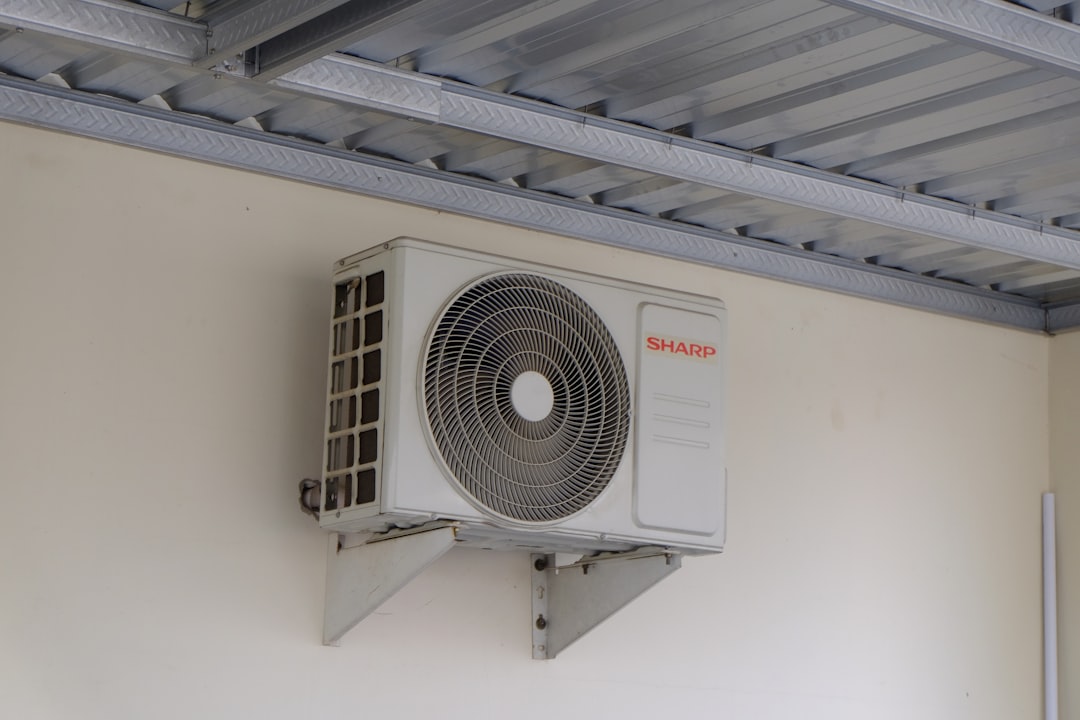
Photo by Andrianto Cahyono Putro on Unsplash
Before you make any HVAC replacement decision, understand what’s DIY and what isn’t. HVAC work involving refrigerants, electrical connections, or gas lines requires a licensed contractor. Handling refrigerants illegally without an EPA Section 608 certification violates federal law, and improper work with gas lines or electrical circuits can cause fires or carbon monoxide exposure.
If your system uses refrigerant - and virtually all do - you cannot legally recover, handle, or dispose of it yourself. Electrical work beyond a thermostat swap also requires a licensed electrician in most jurisdictions. This post helps you understand your options and ask the right questions when you get contractor quotes. It is not a guide to DIY installation.
That said, always install a battery-backed CO detector within 10 feet of any fuel-burning appliance, including gas furnaces. Test it monthly. If your CO detector ever triggers, evacuate immediately and call 911. If you suspect your furnace is producing CO, do not run it. Call a licensed technician right away.
Single-stage systems operate on a simple binary principle: they run at full capacity or they’re off. When your thermostat detects a 1–2 degree temperature deviation from the setpoint, the compressor and blower start at 100% and run until the home reaches the target temperature, then they shut off entirely.
In a typical cooling scenario: it’s 78°F inside, your thermostat is set to 75°F, so the compressor and blower run flat-out until the house reaches exactly 75°F (or slightly below), then everything stops. During heating season, the same pattern applies - the furnace or heat pump runs at maximum until the setpoint is met.
This all-or-nothing pattern creates several real-world consequences. First, there’s an electrical surge at startup: the compressor and blower motors draw maximum amperage the moment they engage. Over a season with dozens of start-stop cycles, this accumulated startup stress shortens component lifespan. Second, because the system can only run at 100%, it tends to overshoot the setpoint and then cycle back on, creating noticeable temperature swings. A bedroom might be 73°F one moment and 77°F the next, depending on sun load or air infiltration.
Single-stage systems are also inherently louder. The blower always runs at full speed whenever the compressor is active, so you hear a noticeable noise every time the system kicks on. Some homeowners adjust their thermostat setpoint higher or install fans in bedrooms just to reduce how often the system cycles. This defeats the energy-efficiency goal but shows the real discomfort single-stage systems impose.
The advantage of single-stage equipment is simplicity and cost. Fewer moving parts and control algorithms means lower manufacturing cost and a lower installation price. For homeowners on a strict budget or in climates with very short cooling or heating seasons, a single-stage system can be entirely adequate. Reliability is also straightforward: less complexity means fewer failure points.
Variable-speed systems (also called variable-capacity or modulating) use inverter technology to adjust compressor and blower speed continuously across their entire operating range. Instead of 100% or 0%, a variable-speed system might run at 40% capacity on a mild day, ramp up to 75% on a warmer afternoon, then drop back as evening cools the air.
This modulation is managed by an electronic inverter that changes the frequency of electrical power delivered to the compressor motor. Lower frequency means slower motor speed, which means less refrigerant flow and less heating or cooling output. The system uses multiple sensors to monitor indoor temperature, outdoor temperature, humidity, and load demand in real time, adjusting speed continuously.
For homeowners, the practical effect is striking: your home maintains a much steadier indoor temperature. Instead of cycling on and off frequently, the variable-speed system runs nearly constantly at low speed on mild days, delivering exactly the capacity the house needs. This eliminates temperature swings, reduces blower noise, and dramatically improves dehumidification during cooling. Longer run times at lower speeds allow the indoor coil to pull significantly more moisture from the air - a real comfort improvement in humid climates.
Variable-speed systems also eliminate electrical startup surge. Since the compressor speeds up gradually instead of slamming to full capacity instantly, in-rush current is much lower. Over hundreds of heating and cooling cycles each season, this reduced mechanical and electrical stress translates to longer equipment life and fewer component failures.
The trade-off is cost and complexity. Variable-speed compressors are significantly more expensive to manufacture, and the inverter control board adds $500–800 to the system price. Installation is identical to single-stage, but the equipment itself typically costs 30–40% more than a comparable single-stage unit. Variable-speed systems also require a compatible thermostat and control setup. An older mechanical or basic programmable thermostat won’t work; you’ll need a thermostat capable of communicating modulating setpoints to the inverter, usually a programmable or smart model.
This is the question every homeowner asks: will variable-speed actually lower my utility bills?
The short answer is yes, but the savings depend heavily on your climate, your home’s insulation quality, and how much your HVAC system actually runs. The longer answer requires calculation.
Single-stage systems carry a seasonal energy efficiency rating (SEER for cooling, HSPF for heating) published by manufacturers. These ratings assume specific, steady-state operating conditions. Modern single-stage units typically achieve SEER 13–16 and HSPF 7.5–9. Variable-speed equipment is commonly rated SEER 18–22 and HSPF 10–12. Variable-speed looks much more efficient on paper.
However, SEER and HSPF ratings are calculated under specific laboratory conditions that don’t fully reflect real-world partial-load operation. Variable-speed’s true advantage shows up during mild weather - the conditions that occur most of the year. During spring and fall, a single-stage system still runs at 100% when active but cycles on and off frequently. A variable-speed system runs continuously at 20–30% capacity, consuming far less energy to meet the actual load. This is where meaningful savings accumulate.
Climate matters enormously. In a moderate climate (think northern California or the Mid-Atlantic), where spring and fall temperatures are mild most of the year, variable-speed systems will save 15–30% on HVAC energy use. In a very hot or very cold climate where the system runs at high capacity most of the season, savings shrink to 8–15% — the system can’t avoid running near-maximum capacity regardless of modulation.
For a concrete picture of your current HVAC consumption, use a Kill A Watt monitor and record power draw during a typical cooling or heating season. If your current system draws 5,000 kWh per cooling season at $0.14/kWh, that’s $700/season. A variable-speed system might cut this to $550–600, saving $100–150 per year. Over a 20-year equipment lifespan, that’s $2,000–3,000 in energy savings. The upfront cost premium for variable-speed is typically $2,000–3,500, so payback happens in 15–20 years for homeowners in moderate climates. In very hot or very cold climates, payback can extend beyond equipment lifespan.
One critical caveat: these savings assume your home’s insulation and air-tightness remain constant. If you upgrade insulation or seal air leaks before replacing HVAC, both single-stage and variable-speed systems will use less energy. Weatherization typically delivers faster payback than equipment upgrades alone.
Both single-stage and variable-speed systems use the same physical footprint: a compressor and condenser coil outside (or in the attic for heat pumps), an indoor coil, and ductwork. Installation is virtually identical for both technologies. A licensed HVAC contractor can replace a single-stage system with a variable-speed system using the same electrical service, gas line (if applicable), and ductwork in nearly all cases.
The critical compatibility requirement is the thermostat. A single-stage system works with any thermostat - basic mechanical, programmable, or smart. Variable-speed systems require a thermostat capable of communicating modulation commands to the inverter. This is typically a programmable or smart thermostat with a control wire running to the outdoor unit or a control module.
When you commit to variable-speed, you’ll need to choose a thermostat. Two popular choices for homeowners are the Ecobee SmartThermostat with Voice Control, which offers remote access and learning capabilities, and the Honeywell Home RTH6580WF Wi-Fi 7-Day Programmable Thermostat, which provides straightforward programming without cloud dependency. Either integrates well with variable-speed systems, but the specific pairing depends on what your HVAC contractor recommends for your equipment brand.
If you have a multi-zone system with dampers and multiple thermostats, variable-speed becomes even more valuable because the modulating capacity can fine-tune output for each zone. Single-stage systems struggle in multi-zone setups because they cycle on and off based on whichever zone reaches setpoint first, leaving other zones under or over-conditioned.
Electrical service is another consideration. Variable-speed compressors typically draw slightly less peak current than single-stage units of equivalent capacity, but they require standard 240V, 60Hz power like all modern HVAC systems. If your home has older 208V service or unreliable power with frequent brownouts, discuss this with your contractor before committing.
Understanding the practical differences between these technologies is essential to your decision. Below is a detailed breakdown of how they compare across key dimensions:
| Aspect | Single-Stage | Variable-Speed |
|---|---|---|
| Operating speed | 100% or off | 20–100% modulated |
| Typical SEER/HSPF rating | 13–16 / 7.5–9 | 18–22 / 10–12 |
| Seasonal energy savings | Baseline | 8–30% (climate dependent) |
| Temperature stability | ±2–3°F swings | ±0.5–1°F swings |
| Noise level | Louder; noticeable on/off | Quieter; steady hum |
| Dehumidification during cooling | Moderate | Excellent (longer run times) |
| Upfront installed cost | Lower baseline | 30–40% premium ($2,000–3,500 more) |
| Payback period (moderate climate) | N/A | 15–20 years |
| System complexity | Simple | Moderate (inverter control) |
| Thermostat requirement | Any type works | Requires programmable/smart thermostat |
| Expected lifespan | 15–20 years | 15–20 years (fewer thermal cycles may extend) |
The table above assumes correctly-sized equipment in both cases. An undersized single-stage system running constantly at 100% will waste more energy and fail sooner than an oversized variable-speed system running at part load. This is why load calculation matters - a professional Manual J calculation ensures you’re comparing apples to apples.
Variable-speed systems also have lower startup stress. The gradual ramp-up reduces bearing wear and electrical stress compared to the abrupt 0-to-100% transition of single-stage compressors. Over 1,000+ seasonal cycles, this difference accumulates.
The biggest error homeowners make is assuming variable-speed is always the right choice without examining their climate, home condition, and timeline. Here’s what goes wrong:
Mistake 1: Choosing variable-speed in a very hot or cold climate where the system runs continuously. If you live in Phoenix where air conditioning runs 8+ hours daily June through September, or in northern Minnesota where heating dominates 4+ months, your system already runs at high capacity most of the season. Variable-speed’s advantage - part-load efficiency - barely applies. You might save 5–8% on energy, but the $3,000 upfront premium means 35–40 year payback. For extreme climates, single-stage is often the rational choice.
Mistake 2: Upgrading to variable-speed without first addressing insulation or air leakage. If your home has R-13 walls and loose windows, your HVAC system is fighting a losing battle. Even a variable-speed system will run hard most of the year. Spend $2,000–3,000 on weatherization first - new windows, attic insulation, air sealing - then re-evaluate HVAC replacement. You might find a correctly-sized single-stage system meets your needs afterward.
Mistake 3: Buying variable-speed equipment and then pairing it with a basic mechanical thermostat, or failing to program a smart thermostat correctly. Variable-speed technology only delivers efficiency gains if the thermostat tells it what to do. A dumb thermostat will cause the system to run near 100% just like a single-stage unit, negating the benefits. Your contractor should include a compatible thermostat in the quote and walk you through programming, but confirm this explicitly before signing the contract.
Mistake 4: Underestimating maintenance and control board replacement costs. Variable-speed inverter boards are sealed components - if one fails, the entire board is replaced, typically at $800–1,500 plus labor. Single-stage systems have fewer electronics and lower replacement costs. If your home is older or you live in an area with dirty power or frequent voltage surges, factor this risk into your decision.
Mistake 5: Overestimating short-term savings and underestimating installation disruption. Replacing an HVAC system takes 2–3 days and involves refrigerant charging, electrical work, and ductwork modifications. Homeowners sometimes choose cheaper single-stage to minimize hassle, only to regret it when utility bills don’t improve. Conversely, if you’re only staying 5–10 more years, variable-speed’s long payback period means you’ll likely move before recouping the cost.
Q: Will a variable-speed system feel noticeably more comfortable?
A: Yes, most homeowners report significantly better comfort. Because variable-speed systems modulate capacity continuously, temperature swings are much smaller - typically ±0.5–1°F versus ±2–3°F with single-stage equipment. You won’t experience the draft of cold air from supply vents when a single-stage blower slams on at full speed. During cooling, the longer run times at lower capacity also extract substantially more humidity, which many people find dramatically more comfortable in summer. Some homeowners initially notice the “always on” hum of a variable-speed system and find it unusual, but this becomes unnoticeable within a week or two. If noise is a major concern, test a variable-speed system at a contractor’s showroom or ask neighbors with one before committing.
Q: Can I retrofit a variable-speed compressor onto my existing furnace or air conditioner?
A: No, retrofitting is not possible. The compressor, inverter, and control system are engineered as an integrated unit and cannot be separated. You cannot swap a variable-speed compressor into a single-stage outdoor unit or vice versa. You must replace the entire outdoor unit (the condenser/compressor assembly). For a furnace paired with an air conditioner, you could theoretically replace just the AC condenser with a variable-speed model and keep the furnace, but this creates a hybrid system: variable-speed cooling and single-stage heating. Most contractor quotes propose replacing the entire system for warranty consistency and integrated control. This also ensures both heating and cooling benefit equally from any efficiency improvements.
Q: How much will my electric bill actually drop if I switch to variable-speed?
A: This is the most important question, and the answer is climate-dependent. In moderate climates (40–80°F most of the year), expect 15–30% HVAC energy savings. In extreme climates (very hot or very cold), expect 5–15%. To estimate your specific savings, find your current annual HVAC energy use by reviewing historical utility bills for peak cooling or heating months and identifying the HVAC portion of the bill. Multiply that by your local electric rate per kWh. Then apply the 8–30% range based on your climate. A $700/year HVAC bill in a moderate climate might drop to $500–600/year; in an extreme climate, maybe $650–680/year. Over 20 years, that’s $2,000–4,000 saved in moderate climates, or $400–700 in extreme climates. Compare this to the $2,000–3,500 upfront premium to determine if payback timing works for your situation.
Variable-speed and single-stage HVAC systems serve different homes and priorities. If you live in a moderate climate, plan to stay 15+ years, and value steady temperature control and lower utility bills, variable-speed is the superior choice despite its higher upfront cost. The long-term savings and comfort gains justify the premium.
If you live in an extreme climate, have a very tight budget, or plan to move within a decade, a correctly-sized single-stage system is a sensible, reliable choice. It will heat and cool your home adequately, cost less upfront, and require simpler maintenance.
Before deciding, request a Manual J load calculation from your HVAC contractor, get variable-speed and single-stage quotes side-by-side, and calculate payback using your actual utility rates and climate. Don’t let a salesperson’s preference drive the choice. The best system is one that fits your climate, home, timeline, and budget.
Determine your climate zone: Check your local ASHRAE climate zone and estimate how many months per year your system runs at high capacity (above 70%). Moderate climates favor variable-speed; extreme climates favor single-stage.
Get a professional load calculation: Request a Manual J or Manual S load calculation from a licensed contractor. This ensures you’re comparing equipment of equal capacity and establishes your home’s true HVAC needs.
Request detailed quotes: Obtain side-by-side quotes for both single-stage and variable-speed systems from at least two contractors. Ensure both quotes include thermostat, installation, and extended warranty costs.
Calculate your payback period: Multiply your annual HVAC energy use (in kWh) by your local electricity rate. Apply the 8–30% savings range for variable-speed based on your climate. Divide the price difference by annual savings to find payback years, then compare to your expected time living in the home.
Bookmark this guide or subscribe to our newsletter to stay updated on heating and cooling maintenance tips.
Related Reading
Learn more about optimizing your thermostat settings to work with your HVAC system and explore how to prepare your home for an HVAC system replacement.