Central AC vs. Mini-Split: Which Is Right for Your Home?
This post contains affiliate links. As an Amazon Associate, I earn from qualifying purchases at no extra cost to you.
Homeowners replacing or adding cooling often run into the same question: should you stick with central air conditioning or switch to a mini-split? Both can cool your home effectively, but they work differently, cost different amounts to install, and suit different situations. In our experience helping homeowners think through this decision, the right answer almost always comes down to your existing ductwork, your budget, and how many rooms you actually need to condition.
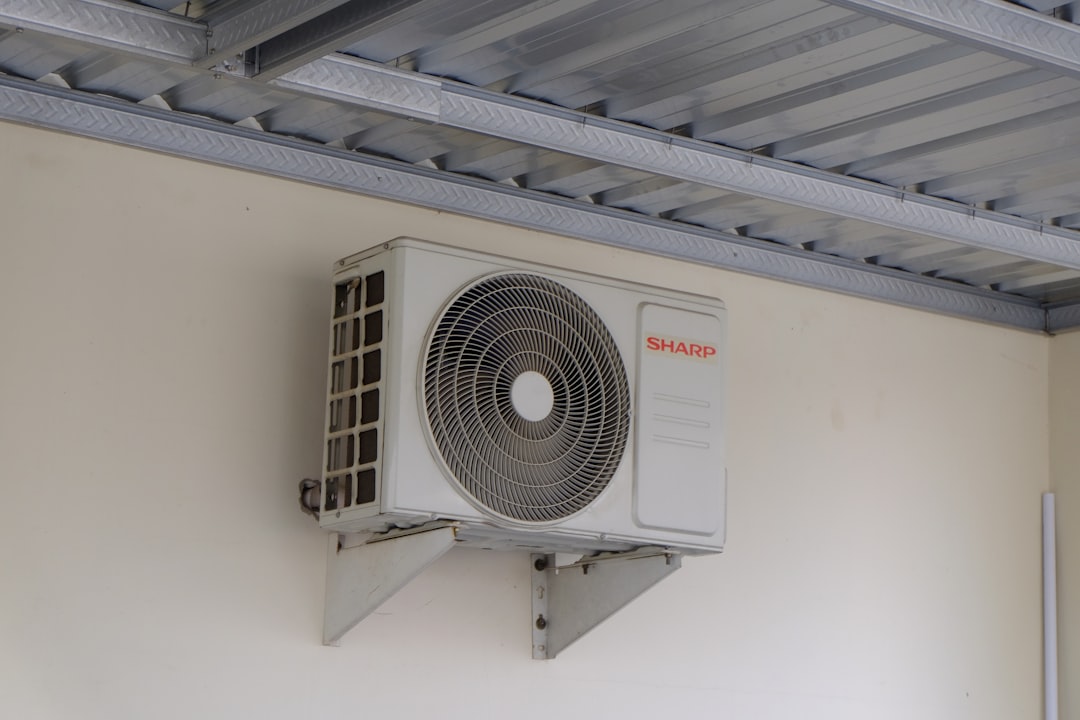
Photo by Andrianto Cahyono Putro on Unsplash
Safety Note: Both central AC and mini-split systems use refrigerants that require EPA Section 608 certification to handle legally. Never attempt to add or recover refrigerant yourself. If you suspect a refrigerant leak - signs include ice on the coil, warm air from the vents, or hissing sounds - shut the system off and call a licensed HVAC technician. We also strongly recommend having a working carbon monoxide detector on every floor of your home, especially if you use a gas furnace alongside your cooling system. See our HVAC annual maintenance checklist for a full rundown of seasonal safety checks.
What Is Central Air Conditioning?
Central AC uses a network of ducts to distribute cooled air throughout your entire home from a single system. A compressor and condenser sit outside, an evaporator coil sits inside (usually on top of or inside your air handler or furnace), and a blower pushes conditioned air through the ducts to every room.
The biggest advantage of central AC is whole-home coverage from one unit. Set one thermostat, cool every room at once. The biggest limitation is that it requires existing ductwork - or a significant investment to install ducts from scratch.
What Is a Mini-Split System?
A mini-split (also called a ductless mini-split or ductless heat pump) connects one outdoor compressor to one or more indoor air handlers mounted on the wall or ceiling. Refrigerant lines run through a small hole in the wall - no ducts required.
Single-Zone vs. Multi-Zone Mini-Splits
A single-zone system pairs one outdoor unit with one indoor handler. This works well for a room addition, a garage, a finished basement, or a space that your existing HVAC does not reach well.
A multi-zone system pairs one outdoor unit with two to five indoor handlers, each in a different room. Each indoor handler has its own thermostat, so you can set different temperatures in different rooms. Multi-zone setups can replace whole-home central AC in homes without existing ducts, though the cost climbs quickly with each additional zone.
Central AC vs. Mini-Split: Cost Comparison
Cost is usually where homeowners make or break this decision.
Installation Costs
Central AC installation for a home with existing ductwork typically runs $3,500 to $7,500 installed, depending on the size of the system and your region. If your home has no ductwork, adding ducts can push the total cost to $12,000 to $20,000 or more - at which point mini-splits start looking very attractive.
A single-zone mini-split professionally installed runs $2,000 to $5,000 depending on the brand, BTU capacity, and complexity of the refrigerant line run. A multi-zone system covering three or four rooms often runs $8,000 to $14,000 installed.
DIY-friendly mini-split kits like the MRCOOL DIY 12,000 BTU Ductless Mini-Split (ASIN: B07B3H6YXT) have changed this calculation for some homeowners. These use pre-charged refrigerant lines that connect without requiring a technician to recover or recharge refrigerant. We have spoken to homeowners who completed a single-zone DIY installation in a weekend, cutting the labor cost to near zero. Note that some local codes still require a permit and inspection even for DIY systems - check with your city before starting.
Operating Costs
Mini-splits generally win on efficiency. Because they are ductless, they eliminate the 20 to 30 percent energy loss that the Department of Energy attributes to duct leaks in a typical forced-air system. Mini-splits also use inverter-driven compressors, which ramp up and down to match demand instead of cycling on and off at full power.
If your central AC is older (10 to 15 years) and your ducts are leaky, the operating cost difference can be significant. A high-efficiency mini-split rated at 20+ SEER2 can cost noticeably less to run than a central system with a 14 SEER rating and leaky ducts.
Which System Is More Efficient?
SEER2 (Seasonal Energy Efficiency Ratio) is the standard measure for cooling efficiency. Higher is better. Energy Star certified mini-splits typically carry SEER2 ratings of 18 to 25+, while most central AC units land between 15 and 22 SEER2.
The Pioneer WYS012GMFI17RL 12,000 BTU Wall Mount Mini-Split (ASIN: B07FQKP3Z3) is a commonly cited entry-level option with a SEER rating of 17 - solid efficiency for the price point. Higher-end inverter units from brands like Mitsubishi, Daikin, and LG push into the mid-20s, which is where operating cost savings really add up over time.
When Central AC Makes More Sense
Central AC is typically the better fit when:
- Your home already has functional, well-sealed ductwork. Replacing or upgrading an existing central system is cheaper than adding mini-splits to every room.
- You want whole-home cooling on a single thermostat without managing multiple indoor units.
- You already use a gas or oil furnace and just need to add a cooling component - the air handler and ducts are already there.
- Your climate is hot but not extreme, and you do not need the hyper-precise room-by-room temperature control that multi-zone mini-splits offer.
If your home has ductwork that is in decent shape and you are replacing a central AC unit that has reached the end of its life, a new central system will almost always be the simpler and more cost-effective choice. We have seen homeowners overthink this when the answer is simply to replace what they have with a higher-efficiency model.
When a Mini-Split Makes More Sense
Mini-splits are usually the better fit when:
- Your home has no existing ductwork, or the cost of installing ducts would rival the cost of a whole-home mini-split setup.
- You are adding a room addition, converted garage, sunroom, or finished basement that the central system does not reach.
- You want zone control - the ability to cool the bedroom at night without cooling the rest of the house.
- You are in an older home with a boiler or baseboard heat and no air handler at all.
- You want heat pump capability year-round, since most mini-splits can also heat efficiently down to around 5 degrees Fahrenheit (varies by model).
If you have a problem room that central air never quite handles - a room over the garage, a home office addition, or a finished attic - a single-zone mini-split is often the most surgical and cost-effective fix. For more on why rooms heat and cool unevenly, see our guide on fixing uneven heating and cooling between rooms.
Can You Install a Mini-Split Yourself?
For DIY-friendly systems (primarily MRCOOL DIY and a few comparable brands), a reasonably handy homeowner can handle the installation without an HVAC license, because the pre-charged line sets eliminate the refrigerant work. You still need to handle the electrical correctly - mini-splits require a dedicated 240V circuit - so most homeowners hire an electrician for that part even when doing the rest themselves.
For conventional mini-splits (Pioneer, Mitsubishi, Daikin, LG, and most others), you will need a licensed technician to connect and charge the refrigerant lines. The equipment itself may cost less, but you cannot legally skip the technician step.
We also recommend keeping a carbon monoxide detector on every floor any time you are doing HVAC work in a home with gas appliances. The Kidde 900-0076 Carbon Monoxide Detector (ASIN: B00CYIYNQ6) is a reliable plug-in unit that does not require battery changes. Running it during and after HVAC work gives you an early warning if combustion equipment gets disturbed.
Before you commit to either system, check our guide to cleaning a mini-split filter and coil - it gives a realistic look at what owning and maintaining a mini-split involves day to day.
Recommended Products
- Pioneer WYS012GMFI17RL 12,000 BTU Ductless Mini-Split - A reliable entry-level mini-split with 17 SEER efficiency and Wi-Fi control. Good starting point for a single room or small addition.
- MRCOOL DIY 12,000 BTU Ductless Mini-Split (B07B3H6YXT) - The most homeowner-friendly DIY mini-split on the market. Pre-charged line sets mean no technician is required for the refrigerant connection.
- Kidde 900-0076 Carbon Monoxide Detector (B00CYIYNQ6) - Plug-in CO detector. Keep one on every floor, especially when working around gas equipment.
As an Amazon Associate we earn from qualifying purchases at no extra cost to you.
If you found this comparison helpful, bookmark it and check out our heat pump maintenance checklist next - many of the same principles apply once your mini-split is installed.