What Size HVAC System Does My House Need?
Safety note: Replacing or installing an HVAC system involves gas lines, refrigerant, and high-voltage electrical work. This guide helps you understand sizing so you can have an informed conversation with contractors - but the actual installation should be done by a licensed HVAC technician. If your home has a gas furnace, make sure you have working CO detectors on every floor. If you ever smell gas, leave the house and call your gas company before doing anything else.
If you’re shopping for a new HVAC system - or just received a quote that felt off - one of the first questions you’ll hit is: what size system does my house actually need? It sounds like it should be straightforward. A bigger house needs a bigger system. But in practice, incorrect sizing is one of the most common and costly mistakes in residential HVAC, and it happens more often than it should.
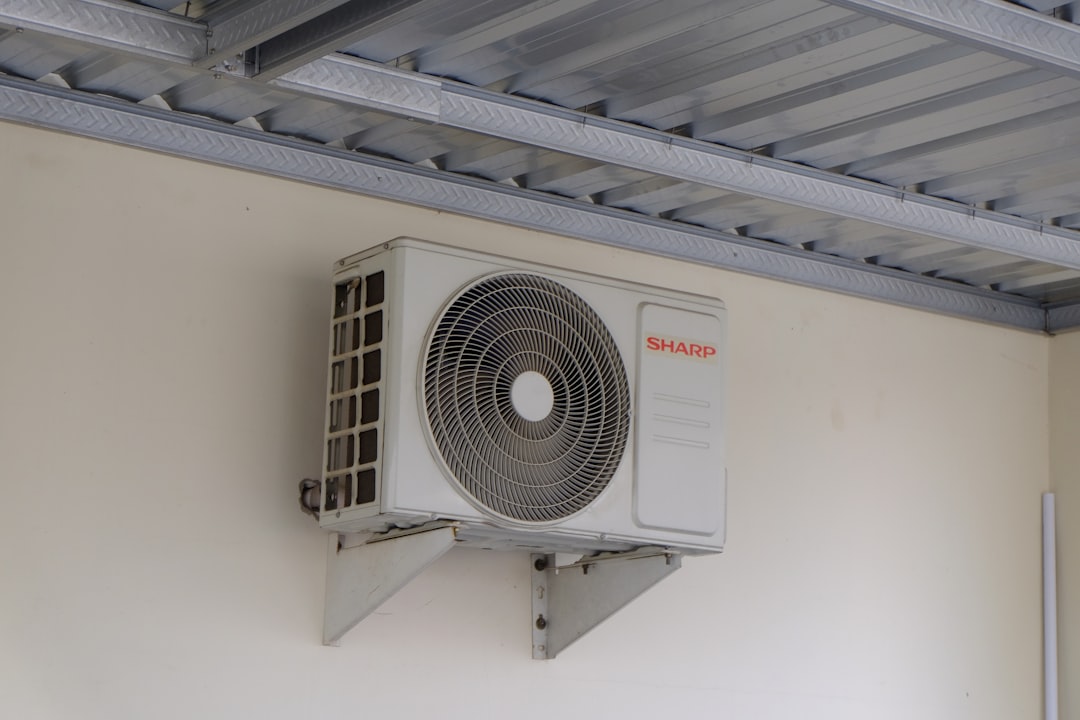
Photo by Andrianto Cahyono Putro on Unsplash
This guide walks through how HVAC sizing actually works - the method contractors are supposed to use, the shortcuts that get people into trouble, and how to know whether a quote you’ve received makes sense.
Why Sizing Matters More Than Most People Realize
An undersized system is the failure mode most homeowners worry about - it runs constantly, struggles to reach the set temperature on the hottest or coldest days, and wears out faster from continuous load. That’s a real problem, but oversizing is actually more common and often causes more issues.
An oversized system cools or heats your home too quickly. It reaches the thermostat setpoint and shuts off before it has time to run a full cycle. This is called short-cycling, and it creates problems that compound over time. The system never runs long enough to properly dehumidify the air, so summer humidity stays high even when the temperature feels right. The constant start-stop cycling puts mechanical stress on the compressor - the most expensive component in the system. And you’ll see higher energy bills because starting the compressor draws a surge of electricity every single time.
A correctly sized system runs in longer, steady cycles. It keeps humidity in check, maintains comfort more consistently, and lasts longer. Getting the size right up front is one of the most consequential decisions in the whole replacement process.
What “Tonnage” and BTUs Actually Mean
HVAC capacity is measured in BTUs (British Thermal Units) per hour, or in “tons.” One ton of cooling capacity equals 12,000 BTU/hr - a holdover from the days when cooling was done with actual blocks of ice, where one ton would absorb roughly 12,000 BTU over 24 hours.
Residential systems typically range from 1.5 to 5 tons (18,000 to 60,000 BTU/hr) for cooling. Heating is measured separately - a gas furnace might be rated at 60,000 to 120,000 BTU/hr input, with an AFUE efficiency rating that determines how much of that input becomes usable heat in your home.
When a contractor refers to a “3-ton system,” they mean the cooling capacity of the air conditioner or heat pump. The furnace or air handler is sized separately, though reputable contractors will match them correctly. Understanding how both numbers work helps you ask better questions and catch proposals that don’t add up.
The Right Way to Size: Manual J vs. the Rule of Thumb
The most common sizing shorthand is 500-600 square feet per ton. A 2,000 sq ft home would therefore need a 3.5 to 4-ton system. You’ll hear this from a lot of contractors, and it’s not useless for a rough sanity check - but it leaves out most of the variables that actually determine the correct size.
A 2,000 sq ft home in Phoenix, Arizona and a 2,000 sq ft home in Portland, Maine are entirely different thermal loads. The Arizona home might need 5 tons of cooling while the Maine home does fine with 3. Square footage alone doesn’t capture ceiling heights, insulation levels, window area and orientation, how shaded the roof is, how many people live there, or how airtight the building is. Using only the square footage rule is exactly how homes end up with oversized equipment. It’s a fast number to give in a sales meeting; an accurate number requires real data.
The industry standard for residential HVAC sizing is called Manual J - formally, the ACCA (Air Conditioning Contractors of America) Residential Load Calculation. Every major HVAC manufacturer and every model building code requires it. A proper Manual J calculation accounts for all the factors that actually affect your home’s heating and cooling loads: your climate zone (based on zip code and local design temperatures), the orientation of the house, the square footage and ceiling heights of each room, insulation R-values in walls, ceiling, and floor, window count and glazing type, construction type (wood frame, masonry, slab-on-grade vs. crawlspace), and infiltration rate.
In our experience running through Manual J calculations for homes in different climate zones, the recommended tonnage frequently differs from the rule-of-thumb estimate by a full ton in either direction - enough to matter significantly over the life of the system. The definitive reference is the Manual J 8th Edition from ACCA. If you want to understand the methodology or verify what your contractor is doing, that’s the authoritative source. When getting quotes, ask directly: “Can you show me the Manual J calculation for this recommendation?” A contractor who can’t or won’t provide one is a red flag.
What Actually Affects Your Load Beyond Square Footage
Once you understand that square footage is just one input, it helps to know which other factors move the number most significantly.
Climate zone is the biggest single variable. Manual J uses design temperatures - the outdoor temperature your system needs to handle on the hottest and coldest days of the year locally. A home in Houston, TX has a design cooling temperature around 97°F; a home in Minneapolis has a design heating temperature around -16°F. These numbers drive the load calculation more than any single feature of the house.
Insulation levels directly affect how fast heat moves through your walls and ceiling. A home with R-38 attic insulation has roughly half the ceiling heat gain of one with R-13. Older homes with inadequate insulation can easily require 20-30% more cooling and heating capacity than a comparable well-insulated home.
Windows are the biggest source of solar heat gain in summer and heat loss in winter. Window area, glazing type (single, double, or triple pane), and which direction they face all matter significantly. A home with a large south-facing wall of glass in a hot climate needs meaningfully more cooling than the same footprint with smaller north-facing windows.
Ceiling height increases the volume of air that needs conditioning. A house with 10-foot ceilings has 25% more air volume than the same footprint with 8-foot ceilings, which shows up in both heating and cooling loads.
Air sealing affects how much unconditioned outside air infiltrates the house and adds to the load. Drafty older homes bring in significantly more outside air. If you’ve had weatherstripping, caulking, or blower door testing done, that data belongs in the calculation.
Duct condition is separate from sizing but affects real-world performance. A correctly sized system won’t perform correctly if the ducts are leaking 20-30% of conditioned air into an unconditioned attic. Before sizing new equipment, evaluating duct condition is worth doing - we cover that in detail in our guide on sealing duct leaks yourself.
For measuring your own square footage accurately before talking to contractors: measure the interior dimensions of each conditioned room (length x width), add them up, and exclude unconditioned spaces like unheated garages and unfinished basements. A laser distance measurer is considerably faster and more accurate than a tape measure for this. The DEWALT 100ft Laser Distance Measurer is what we use for this kind of work - you can take accurate readings solo in larger rooms where a tape measure requires two people.
Is Your Current System the Right Size?
If you already have an HVAC system and you’re questioning whether it’s sized correctly, a few checks don’t require specialized equipment.
The most telling check is watching how the system runs during the most extreme days of the year. On a day when outdoor temperatures hit your local design temperature, a correctly sized system should run in long, fairly continuous cycles. If it short-cycles every 5-7 minutes, it’s likely oversized. If it runs continuously and can’t maintain the set temperature on a moderate day, it’s undersized.
You can also check the supply/return temperature split. The difference between the temperature of air entering the return and the conditioned air at the supply registers should be around 14-22°F on a properly functioning cooling system. An infrared thermometer pointed at supply and return vents lets you take this reading in seconds. The Fluke 62 MAX Infrared Thermometer is accurate to within 1.5°C and handles the range you’ll encounter in HVAC work well - we’ve found it reliable for both HVAC diagnostics and general home energy work. A split under 14°F often points to an oversized system short-cycling; a split above 22°F can indicate an airflow restriction or refrigerant issue.
High indoor humidity in summer when the thermostat reads correctly is another classic sign of oversizing. The system is reaching temperature too fast and shutting off before completing a dehumidification cycle. Understanding SEER ratings and equipment efficiency is also useful here - a correctly sized system with a good SEER rating will outperform a larger, less efficient unit every time.
Common HVAC Sizing Mistakes to Avoid
Replacing old equipment with the same size without questioning it. Many homes - especially those built before energy codes were strict - were originally installed with oversized systems. If your old 4-ton system was oversized from day one, replacing it with another 4-ton perpetuates the problem. Every replacement is an opportunity to size correctly.
Sizing up “just to be safe.” The logic is understandable - nobody wants to struggle in a heat wave. But as covered earlier, oversizing creates its own comfort and longevity problems, and the cost isn’t just the larger upfront price. It’s higher operating costs and a shorter equipment lifespan.
Not accounting for recent home improvements. If you’ve added insulation, replaced single-pane windows with double-pane, or done significant air sealing work, these reduce your load. A Manual J done before those improvements will overstate what you need now. When we evaluated a 1980s ranch that had its attic insulation upgraded from R-13 to R-38, the revised load calculation came in nearly a full ton lower than the original equipment - enough to drop from a 3-ton to a 2.5-ton system with meaningful energy savings.
Skipping duct system evaluation. New equipment paired with a leaky, undersized duct system won’t perform to spec. Ask your contractor to test static pressure and evaluate duct condition as part of the project scope - not as an add-on you find out about later.
Bookmark this guide and check out our detailed comparison of central AC vs. mini-split systems to help decide which system type fits your home once you know the capacity you need.
Frequently Asked Questions
Can I size an HVAC system myself without a contractor? You can do a rough estimate using online Manual J calculators - several HVAC manufacturers offer free web-based versions - but getting the inputs right requires knowing your insulation R-values, window specifications, and infiltration rate, which most homeowners don’t have on hand. A rough estimate can help you sanity-check a contractor’s quote, but it shouldn’t replace a proper Manual J using real data about your house.
Does a bigger system mean faster cooling or heating? It gets to temperature faster, yes - but at the cost of comfort. An oversized system blasts the house to setpoint, then shuts off. The result is temperature swings and poor humidity control rather than the steady, comfortable conditions a correctly sized system provides.
Should I always replace old equipment with the same tonnage? Not necessarily. If nothing significant has changed about the house or local climate data, the same size may still be correct. But if you’ve done renovations, improved insulation or windows, or if the original installation was never properly calculated, a new Manual J is worth having before you commit to a tonnage.
What’s the difference between the load calculation and equipment selection? The load calculation tells you the BTU capacity you need. Equipment selection is choosing a specific unit at that capacity with an appropriate efficiency rating (SEER for cooling, AFUE for gas heat, HSPF for heat pump heating) and features (variable speed, two-stage, etc.) that fit your priorities and budget. These are two separate decisions, and a good contractor will walk you through both.
How does altitude affect HVAC sizing? Air is less dense at higher altitudes, which reduces the heat-carrying capacity of the air. HVAC equipment installed above approximately 2,000 feet typically needs a derating factor applied to its rated capacity - this is another detail that belongs in a proper Manual J calculation and another reason not to size purely from a general rule of thumb.
Recommended Products
- Manual J 8th Edition - Residential Load Calculation (ACCA) - The official ACCA sizing standard; useful for understanding exactly what your contractor should be doing
- Fluke 62 MAX Infrared Thermometer - Check supply/return temperature splits to evaluate whether your current system is performing correctly
- DEWALT 100ft Laser Distance Measurer - Measure room dimensions accurately for your own square footage verification before meeting with contractors