Refrigerant Types Explained: R-22, R-410A, and R-32
If your AC has ever needed a “recharge,” you’ve heard the term refrigerant. But not all refrigerants are the same, and which one your system uses has real consequences for repair costs, environmental impact, and how long you can keep running your current equipment.
This guide breaks down the three refrigerants you’re most likely to encounter as a homeowner: R-22, R-410A, and R-32. You’ll learn what each one is, why the industry has been phasing them out, and what to do depending on which type your system uses.
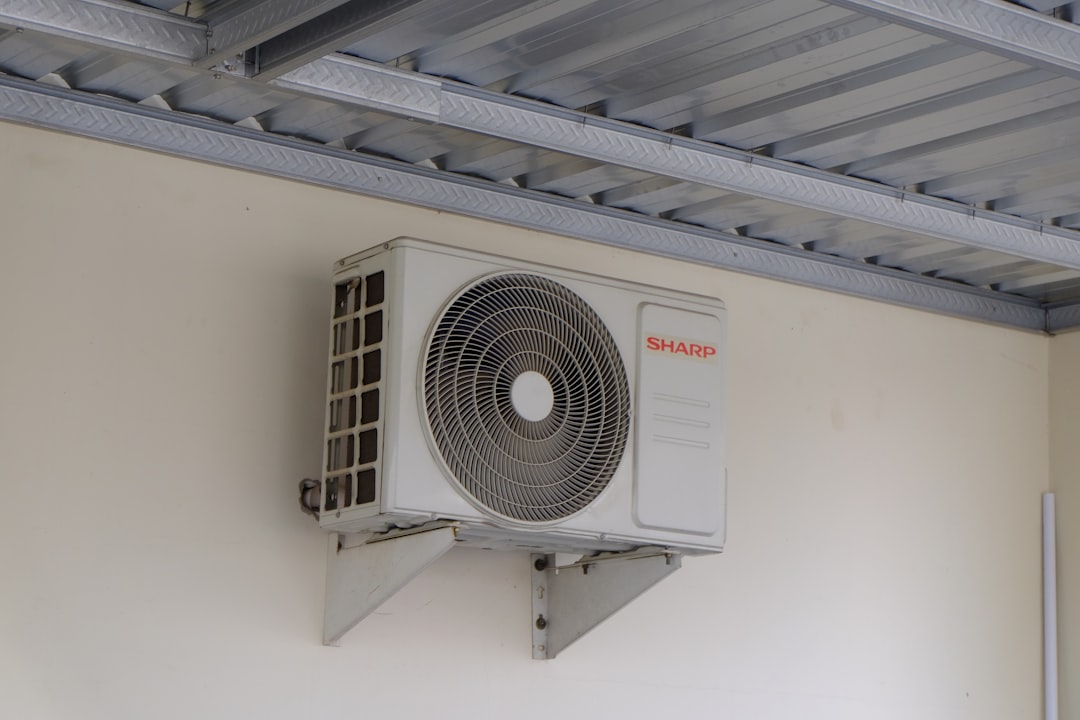
Photo by Andrianto Cahyono Putro on Unsplash
Safety note: Refrigerant handling is regulated by the EPA and requires Section 608 certification. Do not attempt to add, remove, or recover refrigerant yourself. If your system is low on refrigerant, that means it has a leak. Call a licensed HVAC technician. Also ensure your home has a working carbon monoxide detector if you have gas-fired equipment, and have CO levels checked any time a technician is working on your system.
What Is Refrigerant and How Does It Work?
Refrigerant is the chemical compound that absorbs heat from inside your home and releases it outside. It cycles continuously between your indoor air handler (evaporator coil) and your outdoor unit (condenser coil), changing from liquid to gas and back again as it moves heat out of your living space.
The refrigerant itself does not get “used up” like gasoline. A properly sealed system will hold the same charge for decades. If your system is running low, it means refrigerant has leaked out somewhere, and simply topping it off without finding and fixing the leak is a temporary fix at best.
Different refrigerant types have different chemical properties: their operating pressures, global warming potential (GWP), and ozone depletion potential (ODP) vary significantly. Those differences determine how efficient your system runs, how expensive repairs are, and whether the refrigerant is even still legal to manufacture.
R-22 (Freon): The Phase-Out You Need to Know About
R-22, commonly known by the brand name Freon, was the dominant residential refrigerant for decades. If your central air conditioner was installed before 2010, there’s a good chance it runs on R-22.
The problem: R-22 is a hydrochlorofluorocarbon (HCFC) that damages the ozone layer. Under the Montreal Protocol and U.S. Clean Air Act regulations enforced by the EPA, R-22 production and import in the United States was banned as of January 1, 2020. Only recycled or reclaimed R-22 is still legally available, and the supply is shrinking while prices have climbed.
Is R-22 Still Available?
Technically yes, but in limited supply and at high cost. Reclaimed R-22 exists on the market, but per-pound prices have risen dramatically since the production ban. In our experience tracking repair costs across older systems, R-22 service calls often cost homeowners two to three times what the same refrigerant work would cost on a modern system.
What to Do If Your System Uses R-22
You have three realistic options:
- Continue repairing it as long as the system holds charge and repairs remain cost-effective. This works if the system is otherwise in good shape and leaks are minor and fixable.
- Retrofit with a compatible refrigerant like R-422D or R-407C. Some older systems can run on a “drop-in” replacement, though performance may not match the original spec and you need a technician to verify compatibility.
- Replace the system with a new unit that uses R-410A or R-32. If your R-22 system is more than 15 years old and developing leaks, replacement usually makes more financial sense than continued refrigerant purchases at current prices.
For more on evaluating whether to repair or replace your HVAC system, see our guide on central AC vs. mini-split systems to understand which type of replacement might make sense for your home.
R-410A (Puron): The Current Standard
R-410A replaced R-22 as the standard residential refrigerant in the United States starting around 2010. It’s a hydrofluorocarbon (HFC) blend that contains no chlorine, so it does not deplete the ozone layer. If your system was installed between 2010 and 2024, it almost certainly runs on R-410A.
Why R-410A Replaced R-22
R-410A operates at significantly higher pressures than R-22 (roughly 1.6 times higher at equivalent temperatures), which allows for more efficient heat transfer. Systems designed for R-410A tend to be more energy-efficient than their R-22 counterparts, which is part of why SEER ratings improved substantially in the 2010s. You can read more about how those efficiency ratings translate to real energy savings in our understanding SEER ratings guide.
R-410A systems are also easier and cheaper to service right now because the refrigerant is still widely available and prices are stable.
R-410A Phase-Down: What’s Coming Next
Here’s the catch: R-410A has a very high global warming potential (GWP of 2,088) relative to CO2. Under the AIM Act (American Innovation and Manufacturing Act) and EPA regulations, R-410A production is being phased down in the United States beginning in 2025. New residential HVAC equipment sold in the U.S. is required to use lower-GWP refrigerants starting in 2025.
This does not mean your existing R-410A system is illegal or that the refrigerant will disappear overnight. Like R-22, reclaimed R-410A will remain available for servicing existing equipment. But over time, prices will likely rise as production decreases, following the same pattern as R-22.
If you’re buying a new system today, it should already be rated for a next-generation refrigerant such as R-32 or R-454B.
R-32 and Next-Generation Refrigerants
R-32 is a single-component HFC refrigerant (rather than a blend) with a GWP of 675 – about one-third that of R-410A. It’s been widely used in Asia, Europe, and Australia for years and is now appearing in U.S. residential equipment as manufacturers comply with the AIM Act transition.
How R-32 Compares to R-410A
R-32 operates at slightly higher pressures than R-410A and is mildly flammable (classified as A2L, meaning low flammability). The flammability classification required updates to installation codes and equipment design, which is one reason the U.S. transition took longer than other markets. In testing across markets where R-32 has been standard for years, the refrigerant performs well and offers meaningful efficiency improvements at the system level.
From a homeowner perspective, the practical differences between R-410A and R-32 are minimal if you’re buying new equipment. Both require EPA-certified technicians to handle, both should be virtually maintenance-free if the system is sealed properly, and both cool your home the same way.
Other Emerging Refrigerants
R-454B (sold under the brand name Puron Advance) is a blend with even lower GWP (466) that is also appearing in new residential split systems from major manufacturers. R-466A is another candidate that is non-flammable. Which refrigerant a specific new system uses depends on the manufacturer and equipment category.
When buying a new system, ask the contractor which refrigerant it uses and confirm that service technicians in your area are already stocked and trained for it.
How to Tell Which Refrigerant Your System Uses
You do not need to call a technician just to find out what refrigerant your system contains. Here is how to find out yourself:
- Check the outdoor unit nameplate. This is the metal data plate affixed to the side or back of your outdoor condenser. It lists the refrigerant type (e.g., “Refrigerant: R-410A”) along with the charge weight in ounces or pounds.
- Check the indoor air handler. There may be a sticker or data plate there as well, especially on newer units.
- Check your installation paperwork or manual. The original spec sheet should list the refrigerant type.
- Look up your model number. If the nameplate is faded, search the model number on the manufacturer’s website. The spec page will list the refrigerant type.
- Check the service ports. R-22 and R-410A have different sized service port fittings (R-410A fittings are larger to prevent accidental cross-charging). A technician can identify the refrigerant type immediately from the port size and pressure readings.
When we read system nameplates on older homes, the most common source of confusion is a faded label on a unit that’s 15+ years old. In those cases, the model number lookup is the most reliable method.
Refrigerant Comparison: R-22 vs. R-410A vs. R-32
| Property | R-22 | R-410A | R-32 |
|---|---|---|---|
| Also known as | Freon | Puron | Difluoromethane |
| Ozone depletion | Yes | No | No |
| Global warming potential | 1,810 | 2,088 | 675 |
| Flammability | None (A1) | None (A1) | Low (A2L) |
| U.S. production status | Banned since 2020 | Phase-down started 2025 | No phase-down planned |
| Typical system age (U.S.) | Pre-2010 | 2010-2024 | 2025+ |
| Current availability | Reclaimed only, expensive | Widely available | Growing availability |
| Can a homeowner handle it? | No – EPA Section 608 required | No – EPA Section 608 required | No – EPA Section 608 required |
Key takeaway: None of these refrigerants are something a homeowner should purchase, handle, or add to a system without certification. The difference matters for understanding your repair costs and replacement timeline, not for DIY work.
Common Mistakes Homeowners Make With Refrigerant
Assuming low refrigerant is normal wear. Refrigerant does not deplete in a healthy system. If a technician says you need a “top off” without diagnosing a leak, ask where the refrigerant went. Charging a leaking system without finding and repairing the leak is money wasted.
Buying refrigerant online. Selling refrigerant to uncertified individuals in containers larger than two pounds is illegal under EPA regulations. Some products marketed online are not the refrigerant listed, are contaminated, or are not the correct type for your system. A bad charge can damage your compressor.
Ignoring a leaking R-22 system for years. We’ve seen homeowners spend hundreds of dollars annually on reclaimed R-22 charges rather than replacing an aging system. When the math includes both the escalating refrigerant cost and reduced efficiency, replacement typically pays back within a few years.
Assuming any refrigerant technician can service any system. Technicians need specific equipment and training for each refrigerant type. If a new R-32 system needs service in 2027, confirm your contractor is equipped for it, not just R-410A.
Cross-charging. Adding the wrong refrigerant to a system (for example, R-410A into an R-22 system) will not work and can cause serious equipment damage. This is why fittings are sized differently and why certification is required.
Not knowing what tools were used during service. A legitimate refrigerant service call involves a manifold gauge set (such as the BACOENG 4 CFM AC Vacuum Pump and Gauge Set) to measure system pressures, plus a refrigerant scale for weight-based charging. If a technician can’t explain what readings they took or what the charge weight should be, that’s a red flag. Knowing that these tools exist and what they’re for helps you ask the right questions. For reference, a recharge hose kit with gauge is what connects a gauge manifold to the system’s service ports – a basic piece of equipment any technician servicing your unit should have on hand.
Frequently Asked Questions
Can I add refrigerant to my AC myself?
No. Federal law requires EPA Section 608 certification to purchase and handle refrigerants above a certain container size and to vent, recover, or add refrigerants to systems. Beyond the legal issue, adding refrigerant without finding the leak that caused the low charge will not solve the problem. Call a licensed technician.
My technician said my R-22 system needs a charge. Should I do it?
It depends. Get a leak test done first. If the leak is small, accessible, and repairable, charging after the repair makes sense if the system is otherwise in good shape. If the leak is in the coil or compressor and your system is 15+ years old, that service bill may exceed the remaining value of the equipment. Ask for a written estimate before authorizing any refrigerant work on an older system.
Is R-32 safe to have in my home?
Yes, within a properly designed and installed system. The A2L classification means R-32 has a low flammability threshold under specific lab conditions. Modern equipment designed for R-32 is built and tested to handle this safely, and installation codes have been updated accordingly. The risk to a homeowner is effectively zero in normal operation.
Will R-410A refrigerant become unavailable like R-22?
Eventually, but not imminently. The AIM Act begins reducing R-410A production allowances in 2025, but there will be a long tail of reclaimed refrigerant available for servicing existing equipment. Expect prices to rise gradually over the next decade, similar to what happened with R-22 after its phase-out began.
How do I know if my new system is using a compliant refrigerant?
Ask the contractor and check the system nameplate after installation. Any new residential split system sold in the U.S. after January 1, 2025 should use a refrigerant with a GWP below 700. If a contractor installs a new R-410A system today, ask about compliance with EPA regulations under the AIM Act.
What does a refrigerant leak smell like?
R-22 has a faint, slightly sweet smell at high concentrations. R-410A and R-32 are largely odorless. In practice, most refrigerant leaks are not detected by smell – they show up as reduced cooling, ice on the evaporator coil, or higher energy bills. If you suspect a leak, have a technician check with a refrigerant leak detector.
Understanding your system’s refrigerant type helps you make better decisions when something goes wrong. If you have an R-22 system, the clock is ticking on cost-effective repairs – plan for replacement in the next few years. If you have an R-410A system installed in the last 15 years, you’re fine for now but should know that future replacements will use newer refrigerants. If you’re buying new equipment today, make sure it uses a next-generation low-GWP refrigerant.
The most important rule: refrigerant is not a DIY material. It is regulated, pressurized, and potentially hazardous. For any diagnosis or service involving refrigerant, the right move is always to hire a licensed HVAC technician. The EPA’s Section 608 refrigerant management regulations are a good resource if you want to understand what your technician is legally required to do.
Related reading: How to Improve Home Air Quality With Your HVAC System
Bookmark this guide for reference the next time your AC needs service. Have a question about your specific system? Drop it in the comments.