UV-C Air Purifiers for HVAC: Do They Actually Work?
The marketing for indoor air quality products often feels like a mix of genuine science and high-pressure sales tactics. You have likely seen the claims that a single ultraviolet light bulb installed in your ductwork can eliminate 99 percent of bacteria, viruses, and mold spores. If you suffer from seasonal allergies or you have noticed a persistent musty smell whenever the air conditioner kicks on, the idea of a maintenance-free light that sanitizes your air is incredibly appealing. However, the reality of UV-C air purifiers is more nuanced than the brochures suggest. These systems are not a magic wand that transforms your home into a sterile surgical suite, but they are highly effective tools when applied to specific, localized problems within your HVAC system.
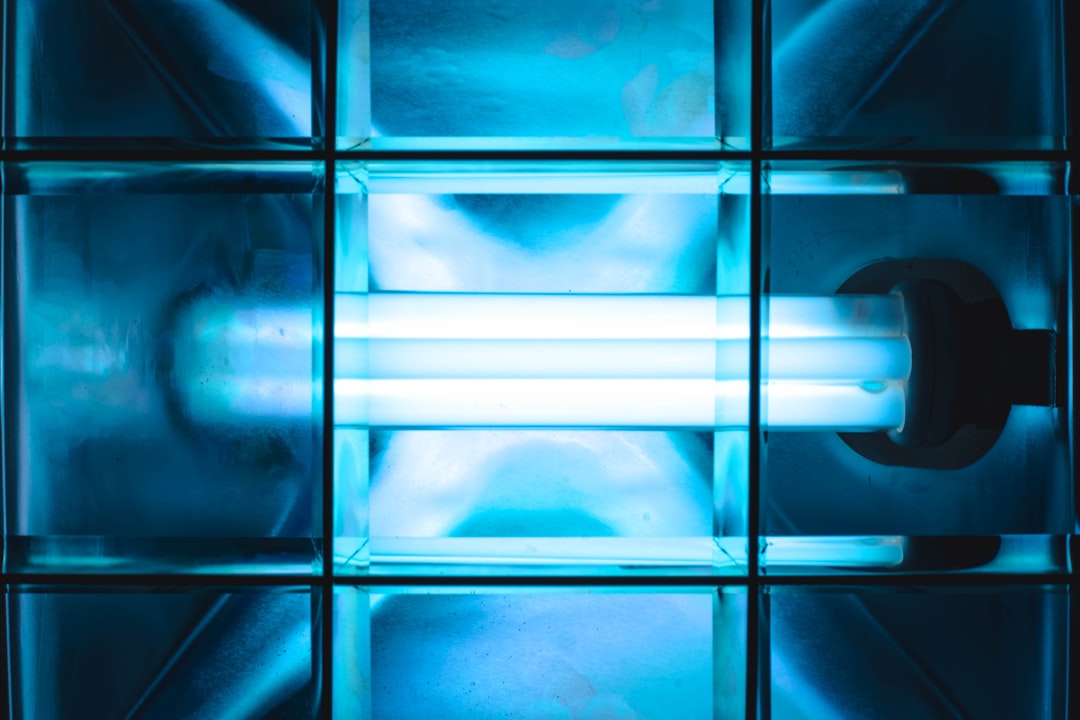
Photo by Jonathan Gagnon on Unsplash
The Science of UV-C Air Purifiers for HVAC
To understand if these systems work, you have to understand the specific band of light they use. Ultraviolet light is categorized into UV-A, UV-B, and UV-C. The UV-C spectrum, specifically the 254-nanometer wavelength, is known as the germicidal band. This light is high-energy enough to penetrate the cellular walls of microorganisms and disrupt their DNA or RNA. Once the genetic material of a mold spore or a bacterium is damaged, the organism can no longer reproduce. In biological terms, it is effectively dead because it cannot colonize your ductwork or your lungs.
The effectiveness of this process is governed by two main variables: intensity and dwell time. Intensity refers to how powerful the UV lamp is, while dwell time refers to how long the microorganism is exposed to that light. This is where many homeowners get confused. If a mold spore is sitting still on your air conditioning coil, the UV light has an infinite dwell time to do its job. If that same spore is rushing past a light bulb at 500 feet per minute inside your return air duct, the dwell time is a fraction of a second. To kill airborne pathogens in a moving air stream, you need a significantly higher intensity than you do for surface sterilization. This scientific reality is why you must choose your equipment based on your specific goal: are you trying to keep your equipment clean, or are you trying to scrub the air itself?
According to the ASHRAE position document on filtration and air cleaning, UV-C is a proven technology for controlling biological growth on surfaces, but its impact on moving air streams depends heavily on the system design. When you see a cheap stick light advertised online, it is almost certainly designed for surface treatment, not for “on-the-fly” air purification. If you want to actually purify the air as it moves, you need a multi-lamp array or a very high-output ballast that generates enough microwatts per square centimeter to compensate for the lack of dwell time.
Do UV-C Air Purifiers for HVAC Actually Work for Mold?
The short answer is yes, but specifically for the mold that grows inside your air handler. Your air conditioner works by pulling moisture out of the air. That moisture condenses on the evaporator coils and drips into a primary drain pan. This dark, damp, and cool environment is the perfect breeding ground for organic growth. Over time, a layer of biofilm (often called “dirty sock syndrome”) can develop on the coils. This film restricts airflow, reduces the heat transfer efficiency of your system, and eventually releases spores into the air that circulates through your home.
When you install a system like the Honeywell UV100A1059 UV Air Treatment System directly over the evaporator coil, you are utilizing the technology in its most effective configuration. The light shines constantly on the wet surfaces of the coil and the drain pan. Because the mold is stationary, the dwell time is constant. In this application, UV-C is incredibly effective. It prevents the biofilm from ever forming, which keeps your coils clean and your air smelling fresh. This is a proactive maintenance tool rather than a reactive air cleaner.
If you are struggling with high humidity in the home, you should also look into Indoor humidity control: humidifiers, dehumidifiers, and your HVAC to ensure your system is properly balanced. A UV light can kill the mold, but if your house is at 70 percent humidity, you are fighting an uphill battle. In our experience, homeowners who pair a coil-mounted UV light with proper humidity control see the best results. Using UV-C for surface treatment is the gold standard for maintaining HVAC efficiency. It pays for itself by preventing the need for professional coil cleanings, which often involve harsh chemicals and significant labor costs.
Installation Requirements and Safety Protocols for the DIYer
Installing a UV-C system is a project most handy homeowners can handle, but it requires a healthy respect for the hardware. UV-C light is invisible to the human eye, but it is extremely dangerous. Looking directly at an active lamp for even a few seconds can cause permanent retinal damage or “welder’s flash,” which feels like having sand rubbed into your eyes. Furthermore, UV-C light can degrade certain materials, such as standard plastic drain pans or low-quality flexible ductwork, if they are not shielded.
Safety Warning: Before you begin any work on your HVAC system, turn off the power at the furnace switch and the breaker panel. If your system uses gas, ensure your carbon monoxide (CO) detectors are tested and functional before and after you finish your project. If you are uncomfortable cutting into sheet metal or tapping into 24V or 120V electrical lines, stop and call a licensed HVAC professional.
When installing a unit like the In-Duct UV-C Air Purifier System, you must select the right location. For coil cleaning, the lamp should be mounted about 12 to 18 inches away from the coil face, centered so the light reaches as much of the surface area as possible. You will need a hole saw to cut a 1-inch or 2-inch opening in the plenum or the coil cabinet. Most DIY units come with a mounting plate and a gasket to prevent air leaks.
For the electrical connection, you generally have two options. Some units come with a standard 120V plug that you can run to a nearby outlet. Others are designed to be hard-wired into the 24V transformer of your furnace. I recommend the 120V plug-in models for DIYers because they are easier to service and don’t risk overloading your furnace’s control transformer. If you must hard-wire the unit, verify that your transformer has enough spare Volt-Amps (VA) to handle the extra load of the UV ballast. Always use a sight glass (a small, UV-filtered window) so you can verify the bulb is working without exposing yourself to the light.
Real-World Expectations: What a UV-C Purifier Will and Won’t Do
You must manage your expectations regarding what these lights can achieve for your overall health. A UV-C light is not a vacuum cleaner. It will not remove dust, pet dander, or pollen from your home. These are physical particulates, and they are unaffected by ultraviolet light. To handle those issues, you need high-quality mechanical filtration. If you haven’t already, read our guide on how to improve home air quality with your HVAC system to understand why a MERV 11 or MERV 13 filter is your first line of defense.
A UV-C light is specifically for biological contaminants: bacteria, viruses, and mold. However, even with these, the “kill rate” is not instantaneous for airborne particles. If someone sneezes in the living room, those pathogens have to travel through the return vents, pass the UV light, and be neutralized before they are redistributed. If your fan is set to “Auto,” the air is only being treated when the system is actively heating or cooling. For a UV-C system to have any measurable impact on airborne pathogens, you should run your HVAC fan in the “On” position to ensure continuous air circulation and multiple passes through the light field.
Furthermore, the effectiveness of the light drops off significantly as the bulb ages. Even though a bulb may still be glowing blue, it might not be emitting the 254nm wavelength necessary for germicidal action. Most manufacturers specify that the germicidal output drops below effective levels after 9,000 to 12,000 hours of use. This means you should expect to replace the bulb every 12 months if you run it 24/7. If you ignore this maintenance, you are just burning electricity for a pretty blue glow that does nothing for your air quality.
Maintenance and Longevity: Why You Can’t Set It and Forget It
The biggest mistake homeowners make with UV-C systems is treating them like a permanent fixture. These are consumable items. The UV-C Replacement Lamp for HVAC Systems is something you should keep in your workshop so you have it ready when the annual change-out is due. Because the lamps contain a small amount of mercury, you cannot simply toss them in the household trash. You must dispose of them at a local hazardous waste facility or a hardware store that offers bulb recycling.
Beyond replacing the bulb, you must also clean it. Over time, a thin layer of dust can settle on the glass sleeve of the lamp. This dust acts as a physical shield, blocking the UV-C rays from reaching the air or the coil. Every six months, you should power down the unit, remove the lamp (after it has cooled down), and wipe the glass with a soft cloth and rubbing alcohol. Do not touch the glass with your bare hands; the oils from your skin can create “hot spots” on the quartz glass that cause the bulb to fail prematurely.
If you notice that your air conditioner has started to smell musty again despite having a UV light installed, it is usually a sign of one of three things: the bulb has reached its end of life, the bulb is covered in dust, or the light is not positioned correctly to reach the hidden corners of the drain pan. Regular inspection of the mounting site is also required to ensure that the UV light isn’t causing the plastic components of your air handler to become brittle. If you see signs of “chalking” or cracking on plastic parts near the light, you may need to shield those parts with aluminum foil tape.
Decision Framework: Should You Buy a UV-C System?
Deciding whether to invest in this technology depends on your specific goals and your home’s current environment. Use the following framework to decide if a UV-C purifier is the right move for your HVAC system.
| Goal | Recommended Action | Expected Result |
|---|---|---|
| Eliminate “Dirty Sock” odors | Install a single-lamp coil-scrubbing unit | High success; smells usually vanish within 48 hours. |
| Reduce seasonal allergy symptoms | Upgrade to a MERV 13 filter first; add UV as a secondary step | Moderate success; UV doesn’t stop pollen, only mold. |
| Kill airborne viruses (e.g., flu, colds) | Install a high-output, dual-lamp system in the return duct | Variable success; requires high dwell time and 24/7 fan operation. |
| Prevent mold in a humid basement unit | Install a coil-mounted UV-C light | High success; keeps the unit clean even in damp conditions. |
| Reduce dust and pet hair | Do not buy a UV-C system | Zero success; UV does not affect physical particulates. |
If you live in a dry climate where mold growth on coils is rare, a UV-C system is likely an unnecessary expense. However, if you live in a humid region like the Southeast or the Midwest, these systems are almost a necessity for keeping your evaporator coil from becoming a science experiment. The cost of the electricity and the annual bulb replacement is significantly lower than the cost of a professional HVAC technician coming out to pull and clean a clogged coil.
Common Mistakes and Troubleshooting
One of the most frequent errors I see in DIY installations is placing the UV light in the wrong part of the ductwork. Homeowners often install the light in the return air duct because it is easier to access. While this might provide some minor air-scrubbing benefits, it does nothing to protect the evaporator coil, which is the actual source of most biological issues. We’ve found that prioritizing the supply side (the area after the air passes through the coil) for surface treatment delivers far better results. Always prioritize the supply side for surface treatment.
Another common issue is “short-cycling” the bulb. Some homeowners try to save money by wiring the UV light to only turn on when the blower motor is running. This is a mistake. UV-C lamps are like fluorescent tubes; the act of turning them on and off causes significant wear on the electrodes. A bulb that stays on 24/7 will actually last longer than a bulb that cycles on and off 30 times a day. Furthermore, constant operation ensures that mold cannot grow on the coil during the “off” cycles when the system is dormant but still damp.
If your UV system has a built-in ballast and it stops working, don’t immediately assume the bulb is bad. Check the transformer or the power supply first. Many inexpensive UV kits use low-quality ballasts that are prone to overheating. If you replace the bulb and the unit still doesn’t light up (as seen through the sight glass), the ballast has likely failed. In this case, it is often cheaper to replace the entire kit than to source a proprietary ballast. Finally, always ensure the lamp is fully seated in its socket. Vibrations from the HVAC blower can sometimes wiggle the bulb loose, breaking the electrical connection and causing the unit to fail.
FAQ
Does a UV-C air purifier produce harmful ozone?
Most modern UV-C lamps designed for HVAC use are “non-ozone producing.” They are coated to block the specific 185-nanometer wavelength that converts oxygen into ozone. However, some industrial-strength or very cheap unbranded lamps may still produce a small amount of ozone, which has a distinct “sweet” or metallic smell. Ozone is a lung irritant and should be avoided in residential settings. When purchasing a system, always look for a “UL 2998” certification, which validates that the device is ozone-free. If you smell something like a copy machine after installation, turn the unit off and verify the lamp type.
Can I use a UV-C light instead of a high-quality air filter?
Absolutely not. A UV-C light and a high-quality air filter perform two completely different jobs. The filter is a mechanical barrier that catches dust, hair, and large spores. The UV light is a biological treatment that neutralizes microscopic organisms. If you remove your filter or use a cheap fiberglass “rock catcher,” your UV light will quickly become coated in dust and lose all effectiveness. You should always use the best filter your system can handle without restricting airflow. Think of the filter as the shield and the UV light as the disinfectant.
How do I know if the UV light is actually doing anything?
The most immediate sign that a UV-C light is working is the elimination of odors. If you had a musty or “stale” smell in your home that has disappeared, the light is doing its job. For a more scientific verification, you can perform a visual inspection of your evaporator coil. A system with a functional UV light will have a shiny, clean coil surface and a clear drain pan. If you see slime or “gunk” in the drain pan, the light is either positioned incorrectly or the bulb has lost its germicidal intensity. You can also use “UVC intensity strips,” which are small stickers that change color when exposed to the correct dose of germicidal light.
Conclusion
UV-C air purifiers for HVAC systems are effective, but only when you respect the physics of light and air. If you install a coil-mounted lamp to prevent mold growth and maintain system efficiency, you will see a clear return on your investment through cleaner air and lower maintenance costs. If you expect a single bulb to eliminate all allergens and viruses from a fast-moving air stream, you will likely be disappointed. For the DIY homeowner, the best approach is to start with a surface-treatment light like the Honeywell UV100A1059 to keep the system clean, and then focus on high-quality filtration for the rest.
Bookmark this guide for your next seasonal maintenance check to ensure your indoor air quality stays at its peak.
Related reading: