How to troubleshoot a frozen evaporator coil
Walking out to your air conditioner on a sweltering July afternoon only to find it encased in a block of white ice is a jarring experience. It feels like a physical impossibility. How can a machine designed to fight heat be losing a battle to its own internal winter? Most homeowners react by turning the thermostat down even further, hoping to “force” the cold air out, but that is the worst thing you can do. A frozen evaporator coil is a sign of a system in distress, and if you do not act quickly, you risk destroying the heart of your HVAC system: the compressor. Ice is never a normal byproduct of air conditioning. If you see frost on the copper lines or ice crystals on the cabinet, your system is no longer cooling your home; it is effectively a very expensive, very inefficient ice maker.
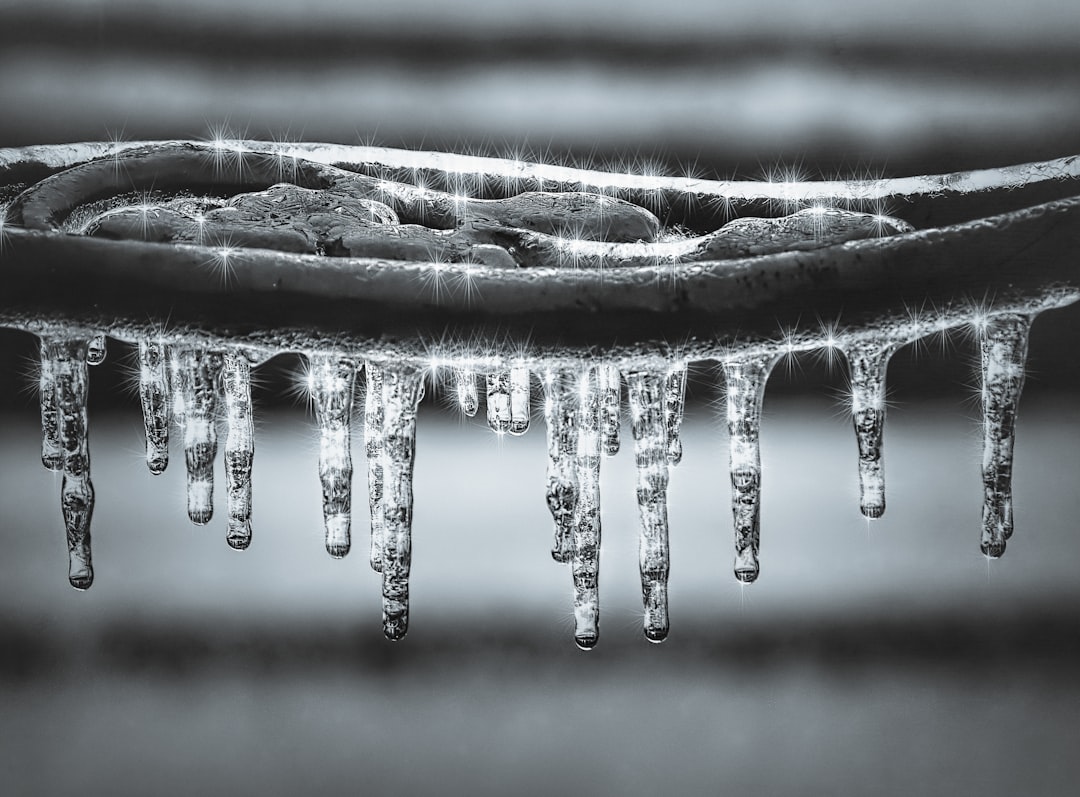
Photo by Robert Zunikoff on Unsplash
SAFETY WARNING: Before you begin any HVAC troubleshooting, ensure your system is powered off at the thermostat and the breaker. If your system uses gas for heating, ensure your Carbon Monoxide (CO) detectors are tested and functional, as a cracked heat exchanger (often caused by extreme temperature fluctuations) can lead to CO leaks. While many airflow issues are DIY-friendly, anything involving the handling of refrigerants or internal electrical components should be handled by a licensed professional. If you find a refrigerant leak, do not attempt to patch it yourself. Call a pro.
The Physics of Why an Evaporator Coil Freezes
To fix a frozen coil, you have to understand the delicate balance of heat exchange. Your air conditioner does not actually “create” cold. Instead, it removes heat from your indoor air. This happens at the evaporator coil, where cold liquid refrigerant absorbs heat from the air blowing across the fins. As the refrigerant absorbs this heat, it boils into a gas and carries that heat outside. For this process to work, two things must happen simultaneously: the refrigerant must be at the correct pressure, and there must be enough warm air moving over the coil to keep the temperature of the metal above the freezing point.
When that balance is disrupted, the temperature of the coil drops below 32 degrees Fahrenheit. Any moisture in the air (humidity) that naturally condenses on the coil will instantly freeze. This thin layer of ice acts as an insulator, making it harder for the refrigerant to absorb heat from the air. This causes the coil to get even colder, which leads to more ice. It is a runaway feedback loop. Eventually, the ice becomes so thick that no air can pass through the coil at all. At this point, your house starts getting warmer, and your outdoor unit starts working harder and harder until it eventually burns out.
There are generally three culprits: restricted airflow, low refrigerant levels, or a mechanical failure of the blower. In our experience, about 70 percent of frozen coils are caused by simple airflow issues that you can fix in five minutes. The other 30 percent involve more complex issues like pinhole leaks in the copper or a dying blower motor capacitor. Understanding this distinction is the difference between a free DIY fix and a two thousand dollar repair bill.
The Mandatory First Step: The Great Thaw
You cannot troubleshoot a system that is currently a block of ice. If you try to check the airflow or look for leaks while the coil is frozen, you will get false readings and potentially damage the system further. The very first thing you must do is turn the AC setting to “Off” at the thermostat. However, do not turn the entire system off at the breaker just yet. Instead, switch your fan setting from “Auto” to “On.” This keeps the indoor blower motor running without the outdoor compressor. The warm air from your house will be forced over the ice, melting it much faster than if you just let it sit.
Be prepared for water. A lot of it. A fully frozen evaporator coil can hold several gallons of frozen condensate. As it melts, that water has to go somewhere. Usually, it flows into the primary condensate drain pan and out of the house. However, if your drain line is even slightly clogged, that sudden deluge of meltwater will overflow the pan and end up on your furnace, your floor, or your ceiling. This is why I always keep a Shop-Vac Wet/Dry Vacuum nearby during this process. You can use the vacuum to suck water directly out of the condensate line or the emergency pan to prevent water damage.
Do not be tempted to use a hair dryer, a heat gun, or a screwdriver to chip away at the ice. The copper fins on an evaporator coil are incredibly delicate. If you bend them, you restrict airflow permanently. If you puncture a coil with a screwdriver, you have just turned a simple maintenance issue into a full system replacement. Patience is your best tool here. Depending on the thickness of the ice, it can take anywhere from 2 to 24 hours to completely thaw. You are not finished until you can see the metal fins clearly and there is no more water dripping into the pan.
Common Causes of a Frozen Coil
Airflow Restrictions: The Primary Suspect
Once the system is thawed, the first place you look is the air filter. This sounds like “IT support telling you to restart your computer,” but it is the number one cause of frozen coils. A dirty filter blocks the return air that the system needs to keep the coil warm. If the air cannot get through, the coil stays too cold, and the freeze begins. Check your filter. If it is grey, dusty, or has a layer of pet hair on it, replace it immediately.
However, it is not just about cleanliness; it is about the “MERV” rating. Many homeowners buy the most expensive, high-efficiency filters they can find, thinking they are helping their family’s health. In reality, these thick filters are often too restrictive for older blower motors. They act like a wall, slowing the air down so much that the coil freezes even when the filter is brand new. If you have been having freezing issues, try switching to a basic pleated filter with a lower MERV rating to see if airflow improves.
Beyond the filter, you must inspect your registers and vents. You should never close off more than 10 percent of the vents in your house. People often close vents in “unused” guest rooms to save money, but this actually increases the static pressure in the ductwork and reduces the volume of air moving over the evaporator coil. Make sure all supply vents are open and that no return air grilles are blocked by furniture or curtains. For a deeper look at how air moves through your home, check out our guide on how to improve home air quality HVAC. If you have restricted air at the source, no amount of mechanical repair will keep that coil from freezing.
Mechanical Failures of the Blower System
If your filter is clean and your vents are open, but the coil still froze, you likely have a blower issue. The blower motor is the fan inside your furnace or air handler that pushes air through the coil and into your ducts. If this fan is not spinning at the correct RPM, the heat exchange fails. Start by turning the fan to “On” at the thermostat and listening. If you hear a humming sound but the fan isn’t spinning, your capacitor is likely dead. This is a cheap part, but it requires handling high-voltage electricity to replace.
Another common mechanical issue is a dirty blower wheel. Over years of operation, dust bypasses the filter and sticks to the blades of the fan. Because these blades are curved to move air efficiently, even a thin layer of grime can ruin their aerodynamics. A dirty blower wheel can lose up to 30 percent of its airflow capacity. If you look inside your air handler and see “fuzz” on the fan blades, they need to be cleaned. This usually requires pulling the entire blower assembly out of the unit.
You should also check the evaporator coil itself for dirt. If the previous owner of your home ran the AC without a filter, the underside of the coil is likely matted with dust and hair. This acts as both an insulator and an airflow block. Cleaning a coil is a tedious job that involves specialized foaming cleaners and soft brushes. If you can’t see the light through the fins of the coil, the air can’t get through either. We recommend using a ThermoPro TP20 Wireless Thermometer to monitor the temperature of the air coming out of your vents after cleaning. If the “delta T” (the difference between the return air and supply air) is greater than 20 degrees, you may still have an airflow restriction.
Refrigerant Issues and Leak Detection
This is the point where the DIY homeowner needs to be very careful. A common misconception is that air conditioners “use up” refrigerant like a car uses gas. This is false. An AC is a sealed system. If you are low on refrigerant, you have a leak. When the refrigerant level (charge) is low, the pressure inside the evaporator coil drops. According to the laws of thermodynamics, when pressure drops, temperature drops. This is why a system that is low on “freon” will actually freeze the coil.
If you have ruled out airflow and mechanical blower issues, you likely have a leak. You can sometimes spot these leaks by looking for oily residue on the copper lines or the coil itself, as the refrigerant carries a small amount of oil with it. For a more precise check, a tool like the Elitech HVAC Refrigerant Leak Detector can help you pinpoint the source. However, even if you find the leak, you cannot simply “top it off.” Federal law requires a 608-certified technician to handle and charge refrigerant.
If your system is older, it might still use R-22 refrigerant, which is incredibly expensive and being phased out. In these cases, a frozen coil caused by a leak often signifies that it is time for a new system. For more on this, read our article on how to tell if HVAC needs refrigerant. Do not let a “handyman” just add gas to the system without fixing the leak; you are literally throwing money into the atmosphere, and the coil will just freeze again in a week.
Step-by-Step Troubleshooting Framework
When you are standing in front of a frozen unit, use this decision framework to determine your next move. This ensures you do not waste time on complex repairs when a simple fix is available.
| Step | Action | Potential Outcome | Next Move |
|---|---|---|---|
| 1 | Turn AC Off / Fan On | Ice melts | Proceed to Step 2 |
| 2 | Inspect Air Filter | Filter is black/clogged | Replace filter and test system |
| 3 | Check Supply/Return Vents | Vents are closed or blocked | Open all vents and test system |
| 4 | Inspect Blower Fan | Fan is not spinning or is slow | Replace capacitor or blower motor |
| 5 | Inspect Coil Surfaces | Coil is covered in dust/grime | Clean coil with foaming cleaner |
| 6 | Check for Refrigerant Leaks | Oily residue or “hissing” | Call a licensed HVAC technician |
This framework is designed to be followed in order. We have seen homeowners spend five hundred dollars on a technician to “diagnose” a frozen coil, only for the tech to pull out a filter that looks like a piece of shag carpet. Always start with the easiest, cheapest variables. If you reach Step 6 and the system is still freezing despite a clean filter, a clean coil, and a strong blower, you have a pressure issue that requires professional gauges and specialized training to resolve safely.
Common Mistakes and Troubleshooting Pitfalls
One of the most frequent mistakes we see is homeowners “powering through” the freeze. They see a little frost, and they just turn the thermostat down to 60 degrees. This is catastrophic. When the coil freezes, the liquid refrigerant cannot boil off into a gas. This means liquid refrigerant flows back down the “suction line” to the outdoor compressor. Compressors are designed to compress gas, not liquid. Trying to compress a liquid is called “slugging,” and it will shatter the internal valves of your compressor almost instantly. If you see ice, turn it off. Period.
Another mistake is neglecting the condensate drain line during the troubleshooting process. When a coil freezes, it often pulls dust and debris into the ice. When that ice melts, all that gunk flushes into the drain pan at once. This frequently clogs the 3/4 inch PVC drain line. If you don’t clear that line, your “fixed” AC will immediately shut down again because the float switch (the safety device that detects water) will trip. Always use your wet/dry vac to suck out the drain line from the outside of the house while the coil is thawing.
Finally, do not ignore the outdoor unit. While the evaporator coil is inside, the “condenser” is outside. If the outdoor coil is packed with cottonwood seeds, dirt, or grass clippings, it cannot reject the heat it absorbed from inside. This increases the head pressure of the system and can cause erratic behavior that leads to indoor freezing. A quick spray with a garden hose (not a pressure washer!) can often resolve secondary issues that contribute to a frozen system.
Frequently Asked Questions (FAQ)
Can I run my AC while the coil is thawing?
No. You must never run the air conditioner (the “Cool” setting) while the coil is frozen or in the process of thawing. Running the compressor while the coil is blocked by ice prevents the refrigerant from absorbing heat, which can lead to liquid refrigerant returning to the compressor. This causes permanent mechanical failure. You should only run the “Fan” or “Vent” setting. This uses the blower motor to pull warm air from your house over the ice to melt it. If you run the cooling mode, you are just adding more ice to the problem and risking a multi-thousand dollar repair.
How long does it take for an AC coil to unfreeze?
The thawing process depends entirely on the thickness of the ice and the temperature of the air in your home. If you turn the fan to the “On” position, a light frost might melt in an hour. However, a “solid block” of ice that has encased the entire evaporator cabinet can take 12 to 24 hours to fully dissipate. You cannot rush this. Do not use external heat sources like space heaters or blow torches, as these can melt the plastic components of your air handler or cause the refrigerant inside the copper lines to reach dangerous pressures.
Why does my AC freeze up only at night?
This is a classic symptom of either a slightly low refrigerant charge or an airflow issue that is right on the edge of failure. At night, the outdoor temperature drops. This lowers the pressure of the refrigerant in the system. If your system is already struggling with a dirty filter or a small leak, that nighttime drop in ambient temperature is often enough to push the coil temperature below the freezing point. During the day, the intense heat keeps the coil just warm enough to prevent ice, but the underlying problem is still there. If your system freezes at night, you still need to perform the full troubleshooting steps listed above.
A frozen evaporator coil is a “stop work” order for your HVAC system. While it is frustrating to deal with a hot house, the cost of ignoring ice is far higher than the cost of a few hours of discomfort. By systematically checking your airflow, cleaning your components, and ensuring your blower is operational, you can solve the majority of freezing issues without calling a pro. However, if the ice returns after you have replaced the filter and cleaned the coil, do not hesitate to call a technician. The safety of your compressor and the integrity of your home’s air quality depend on a properly balanced system. Your next step should be to go to your thermostat right now, turn the system to “Off,” and set the fan to “On.”
Check your air filter monthly to prevent these issues from returning during the peak of summer.
Related Reading
Enjoyed this guide? Bookmark it for later or share it with a friend who might find it useful.