HVAC and home insulation: how they work together
If you are treating your HVAC system as a standalone solution for home comfort, you are throwing money into a bottomless pit. Homeowners often believe that a high efficiency furnace or a 20 SEER air conditioner will solve their high utility bills and uneven room temperatures. This is a fundamental misunderstanding of how a home functions. Your HVAC system and your home insulation are not separate entities; they are two halves of a single thermal management system. When they are out of sync, your equipment works twice as hard to achieve half the results. You can buy the most expensive heat pump on the market, but if your attic is under-insulated, that machine is essentially trying to air condition the entire neighborhood.
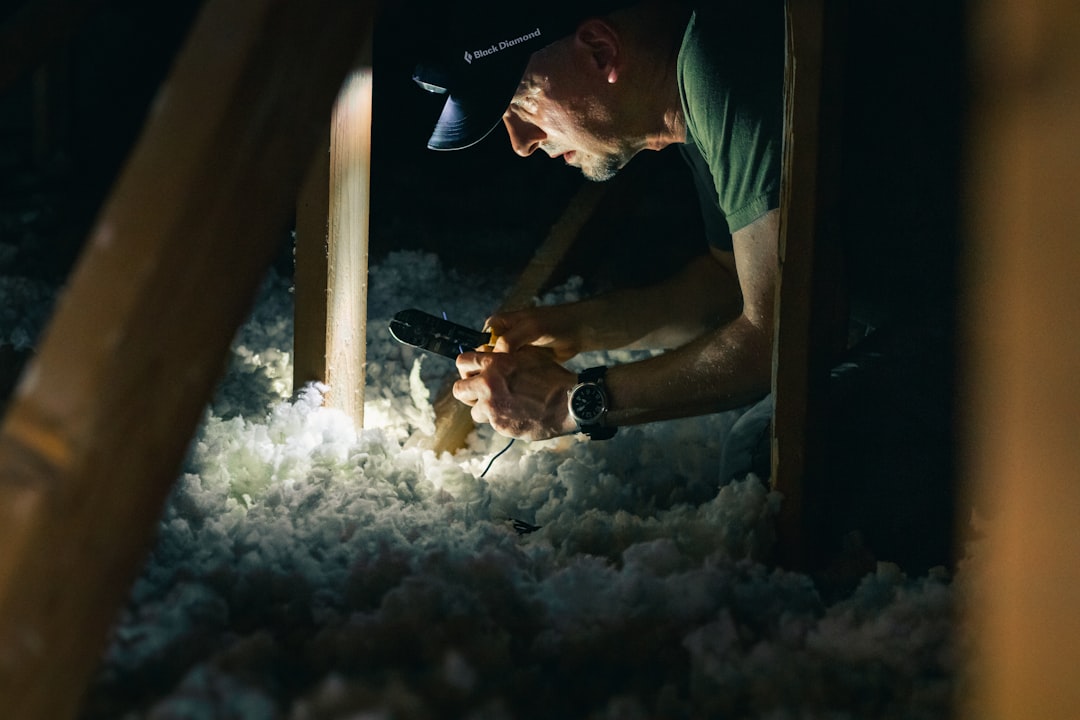
Photo by Greg Rosenke on Unsplash
Safety Warning: HVAC maintenance and insulation upgrades often involve working near high voltage electricity, combustible gas lines, and tight attic spaces. Before inspecting your system or adding insulation, ensure you have functioning Carbon Monoxide (CO) detectors on every floor of your home. If you are uncomfortable testing electrical circuits, climbing into unfloored attics, or handling gas components, call a licensed professional. DIY work on refrigerant lines is illegal in many jurisdictions and requires EPA certification. Always prioritize your safety over a weekend project.
The Physics of the Thermal Envelope
To understand how HVAC and home insulation work together, you must first understand the “thermal envelope.” This is the physical barrier that separates your conditioned living space from the outdoors. Insulation is the primary component of this envelope, acting as a structural resistor to heat flow. Heat naturally moves from warmer areas to cooler areas. In the winter, heat wants to escape your home; in the summer, it wants to force its way in. Your HVAC system is the mechanical force that counteracts this natural flow, but it is the insulation that determines how much work the HVAC system has to do.
Think of your home like a thermos. If the thermos is well insulated, the liquid inside stays hot or cold for hours without any additional energy. If you have a cheap, thin plastic cup, you have to constantly add ice or heat to keep the liquid at the right temperature. Most homes in North America are closer to the plastic cup than the thermos. When your insulation is thin or degraded, your HVAC system must run nearly constantly to replace the energy that is leaking through the walls and ceiling. This constant cycling leads to mechanical fatigue. We see this often in older homes where a perfectly good furnace dies prematurely because it was forced to run three times as many cycles as it was designed for.
The relationship is also about pressure. HVAC systems create pressure differentials within the home. If your envelope is leaky, your furnace might actually be pulling cold air in through cracks in the windows while it tries to push warm air out of the vents. This is why you might feel a draft even when the heat is blasting. You are not just fighting outdoor temperatures; you are fighting the physics of air movement that your own HVAC system is inadvertently triggering through a poor thermal envelope.
Identifying Weak Points with Thermal Imaging
You cannot fix what you cannot see. Most homeowners guess where their insulation is failing based on which room feels the coldest, but that is an imprecise and often frustrating way to manage a home. If you want to take your home efficiency seriously, you need to see the heat movement in real time. This is where professional grade tools become accessible for the dedicated DIYer. Using a tool like the FLIR TG165 Thermal Camera allows you to scan your walls, ceilings, and rim joists to find exactly where the “thermal bridges” are located.
Thermal bridging occurs when a material that is more conductive than the surrounding insulation (like a wooden wall stud or a metal window frame) allows heat to bypass the insulation. When you look through a thermal camera, these show up as distinct streaks or spots of purple (cold) or yellow (hot). In our experience, homeowners are usually shocked to see that their biggest heat loss is not through the windows, but through the top plates of their walls where air leaks into the attic.
When you use a thermal camera, do it on a day with a high “Delta T,” which is the difference between the indoor and outdoor temperature. If it is 70 degrees inside and 30 degrees outside, the leaks will be glaringly obvious. Check the corners of the ceiling, the areas around electrical outlets, and the transition between the floor and the wall. These visual data points allow you to prioritize your insulation budget. Instead of blowing more fiberglass into the whole attic, you might find that you only need to seal a few specific gaps and add a layer of Owens Corning Atticat Insulation to a specific “cold zone” over the master bedroom. This targeted approach saves you money and yields immediate results in how often your HVAC system needs to kick on.
Air Sealing: The Step Everyone Skips
Adding more insulation without air sealing is like putting on a thick wool sweater while standing in a wind tunnel. The sweater provides R-value (resistance to heat flow), but the wind blows right through the fibers, stripping away the warmth. In your home, air leakage accounts for a massive portion of your HVAC load. This is known as “infiltration,” and it forces your system to condition “new” air from the outside constantly rather than recycling and filtering the air already in the home.
The most common areas for air leakage are the “bypass” points. These include recessed lights, plumbing stacks, attic hatches, and the gaps around your chimney. Before you lay down new batts or blow in cellulose, you must use spray foam or caulk to seal these holes. For smaller gaps around doors and windows, products like Frost King Weather Stripping are essential. We have found that properly weather stripping a front door and the door leading to the garage can reduce the runtime of an AC unit by as much as 10 percent during peak summer months.
The “Stack Effect” is the primary driver of this air movement. Warm air rises and escapes through the top of your house (the attic), which creates a vacuum that pulls cold air in through the bottom (the crawlspace or basement). By sealing the top and bottom of the thermal envelope, you neutralize this effect. This allows your HVAC system to maintain a consistent pressure. When the pressure is stabilized, the thermostat stays satisfied for longer periods, preventing the frequent start and stop cycles that kill compressors and blowers. If you are curious about how this affects your equipment choice, you should look into what size HVAC system does my house need because a well sealed home can often use a smaller, cheaper unit than a leaky one.
The Impact of Insulation on HVAC Longevity
We often talk about efficiency in terms of dollars spent on the utility bill, but the real cost of poor insulation is the shortened lifespan of your HVAC hardware. An air conditioner or furnace is designed for a specific number of “starts.” Every time your system turns on, the components experience a surge of electrical current and a spike in mechanical friction. If your home has poor insulation, your system might cycle 5 to 6 times an hour. In a well insulated home, it might only cycle 2 times an hour to maintain the same temperature.
Over a decade, that is a massive difference in wear and tear. We see capacitors fail, contactors pit, and blower motors burn out prematurely in homes where the insulation is neglected. Furthermore, poor insulation leads to “short cycling,” where the air near the thermostat cools down or warms up rapidly while the rest of the house remains uncomfortable. This tricks the system into turning off before it has had a chance to properly dehumidify the air.
Moisture control is a critical part of HVAC performance. In the summer, your AC unit has two jobs: lowering the temperature and removing humidity. If your insulation is thin, heat enters the home so quickly that the AC unit hits the target temperature and shuts off before it has pulled the moisture out of the air. This leaves you feeling “clammy” even at 72 degrees. You end up lowering the thermostat to 68 just to feel comfortable, which further strains the system. By beefing up your insulation, you allow the system to run longer, steadier cycles that effectively manage indoor humidity control, leading to a more comfortable environment and a much longer life for your equipment.
Understanding R-Values and Climate Zones
Not all insulation is created equal, and the amount you need depends entirely on where you live. The effectiveness of insulation is measured in R-value: the higher the R-value, the greater the insulating power. The Department of Energy’s guide on insulation provides a map of climate zones that dictates the recommended R-values for attics, walls, and floors. For example, if you live in the southern United States (Zone 2), an attic R-value of R-38 might be sufficient. However, if you are in the northern states (Zone 6 or 7), you should be aiming for R-49 or even R-60.
Many homeowners make the mistake of thinking that because they have “some” insulation, they are fine. In reality, insulation settles over time. If your home was built in the 1980s and has never been upgraded, your R-19 fiberglass batts have likely compressed and lost a significant portion of their effectiveness. You are essentially operating with a thermal barrier that is half as thick as modern standards require.
When you upgrade, you have choices: fiberglass, cellulose, or spray foam. Fiberglass is the most common DIY option, but it is prone to air bypass. Cellulose is better at stopping air movement and is often made from recycled materials. Spray foam is the gold standard for both R-value and air sealing, but it is generally a professional only job due to the chemicals involved and the precision required. For a homeowner looking to make a dent in their bills, adding a “cap” of blown-in cellulose over existing fiberglass is often the most cost effective way to reach the recommended R-values for your specific climate zone.
Insulation vs. HVAC: A Decision Framework
When you have a limited budget, it can be difficult to decide whether to repair an aging HVAC unit or invest in better insulation. Use the following framework to determine your next move.
| Symptom | Primary Suspect | Recommended Action |
|---|---|---|
| High bills, but the house stays comfortable | Low HVAC Efficiency | Tune-up or replace HVAC unit |
| High bills and the house is never comfortable | Poor Insulation/Air Leaks | Audit insulation and air seal |
| Rooms on the second floor are much hotter | Attic Insulation/Duct Leaks | Increase attic R-value and seal ducts |
| HVAC runs for 5 minutes, then shuts off | Oversized Unit or Air Leaks | Check air sealing before replacing unit |
| Drafts felt near windows and baseboards | Air Infiltration | Apply weather stripping and caulk |
Enjoyed this guide? Bookmark it for later or share it with a friend who might find it useful.
Frequently Asked Questions
Does better insulation really help my HVAC system?
Yes. Insulation acts as a barrier that keeps conditioned air inside your home. When your home is well-insulated, your HVAC system doesn’t have to run as often to maintain your desired temperature, which reduces energy bills and wear and tear on the equipment.
Should I seal air leaks or add insulation first?
You should always air seal before adding insulation. Insulation (like fiberglass) is not effective at stopping air flow. If you don’t seal gaps and cracks first, air will simply blow through the insulation, significantly reducing its effectiveness.
How do I know if I need more insulation?
Common signs include high utility bills, uneven temperatures between rooms, and the HVAC system running constantly. You can also use a thermal camera to identify cold spots or check your attic to see if the insulation is below the level of the floor joists.
What is R-value?
R-value measures the thermal resistance of insulation material. The higher the R-value, the better the material is at resisting heat transfer. The recommended R-value for your home depends on your specific climate zone.