Whole-Home Dehumidifiers vs. Portable Units: Which Is Right for Your Home?
This post contains affiliate links. As an Amazon Associate, I earn from qualifying purchases at no extra cost to you.
Excess humidity is one of the most underappreciated threats to a home. At 60% relative humidity and above, mold growth accelerates, dust mites thrive, wood floors warp, and your central air conditioner works harder than it was designed to. The damage is cumulative and quiet - until you notice a musty smell behind the drywall, a stained ceiling tile, or a bathroom door that no longer closes properly.
The question most homeowners eventually reach is not whether to address high indoor humidity, but which tool to use. Whole-home dehumidifiers integrate with your existing HVAC system and treat every cubic foot of conditioned air automatically, around the clock. Portable units sit in a room, run their compressor, and collect water in a tank you empty by hand. Both categories remove moisture from the air. That is where the similarities stop.
The right choice depends on how widespread your humidity problem is, how much upfront cost you can absorb, and how much ongoing attention you want to give the equipment. For a single damp room or a problem limited to the basement, a portable dehumidifier is faster to deploy and cheaper to buy. For a whole-house humidity problem that makes every floor uncomfortable through a five-month humid season, a whole-home unit is the more thorough and better long-term value.
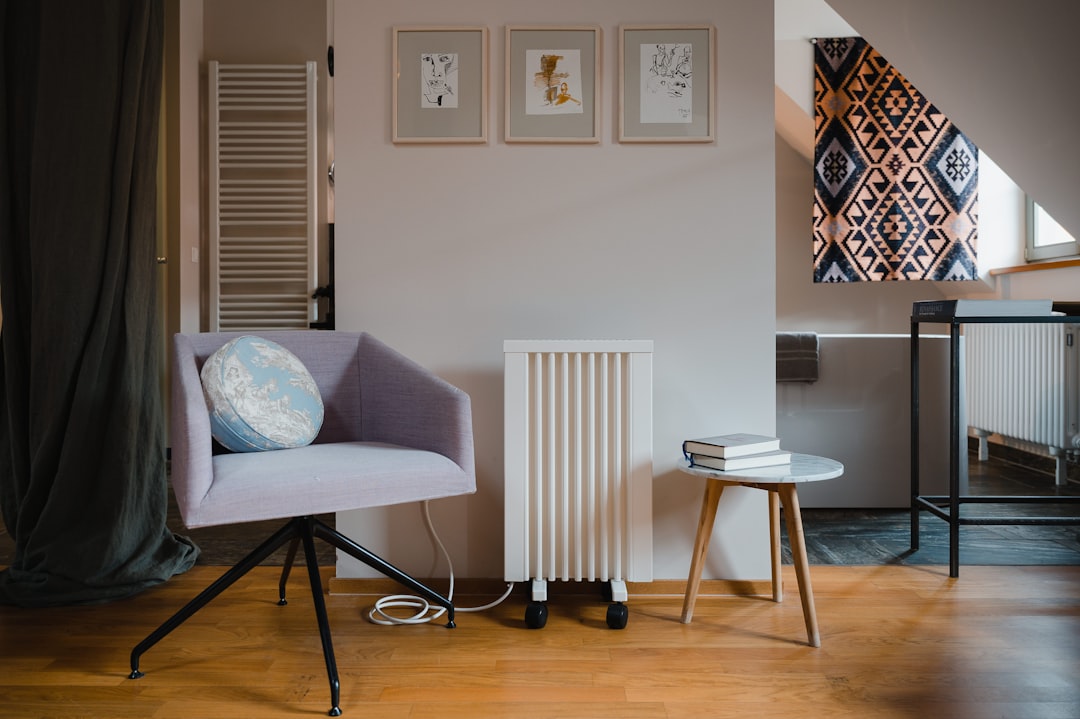
What Whole-Home Dehumidifiers Actually Do
A whole-home dehumidifier is a dedicated appliance that integrates with your forced-air HVAC system. The most common configuration draws humid air from the return plenum, passes it across a refrigerant-cooled coil to condense moisture out, and returns drier air to the supply duct. The extracted water drains continuously to a floor drain, laundry sink, or condensate pump - no bucket, no manual emptying, no intervention required.
Capacity is rated in pints of water removed per day (PPD). Residential whole-home units typically operate at a meaningfully higher capacity than even the largest consumer portable units. Leading brands in this category include AprilAire, Santa Fe, and Honeywell. Control is handled by a built-in humidistat or by integration with a compatible smart thermostat. You set your target relative humidity, and the unit cycles on and off automatically until that level is reached and maintained.
ASHRAE Standard 55 and EPA guidance both recommend maintaining indoor humidity between 30% and 50% year-round - the band where occupant comfort and structural health align best.
Installation and Upfront Cost
Whole-home dehumidifier installation is not a DIY task for most homeowners. A standard installation involves:
- Cutting into the return and supply ductwork on your air handler
- Routing and sealing a dedicated condensate drain line to a floor drain or pump
- Running a dedicated electrical circuit (typically 120V or 240V depending on the model)
- Wiring a standalone humidistat or integrating with your existing thermostat
Professional labor runs $500 to $1,500 depending on your market and access to the mechanical space, on top of equipment costs of $700 to $1,800. Total installed cost typically lands between $1,200 and $3,000. That is a real number and should not be rationalized away when comparing your options.
Operating costs are more manageable. Energy Star-rated whole-home dehumidifiers are efficient. Expect to pay $20 to $60 per month in electricity during humid season, depending on your climate, home size, and daily runtime.
Safety warning: Whole-home dehumidifier installation involves electrical connections inside or adjacent to your air handler. Unless you have verifiable experience with HVAC electrical work and understand your local permit requirements, hire a licensed HVAC technician. Improper wiring in a mechanical closet creates a serious fire risk and will void most equipment warranties.
Lifespan and Long-Term Value
Quality whole-home units from established brands routinely last 15 to 20 years with annual maintenance. When you amortize a $2,500 installed cost over 15 years, the per-year cost becomes competitive with running even a single portable unit through multiple replacement cycles - before accounting for the difference in comfort or convenience.
What Portable Dehumidifiers Do Well
Portable dehumidifiers are self-contained, standalone units that plug into a standard 115V household outlet. They pull room air across a refrigerant coil, condense out moisture, and collect the water in an internal reservoir you empty manually - or drain via a garden hose run to a nearby floor drain. No ductwork, no contractor, no permit required.
Capacity for consumer portables ranges from 20 to 70 PPD. Energy Star certifies portable dehumidifiers; certified models must use at least 10% less energy than the federal minimum efficiency standard. Retail prices for quality Energy Star units range from $150 to $500.
Where Portables Make Clear Sense
- Targeted problem spaces. A damp basement corner, a bathroom that retains steam after showers, a bonus room over the garage with poor HVAC coverage, or a crawlspace access area. Isolated problems do not need whole-home solutions.
- Renters and condos. If you cannot modify the HVAC system, a portable is the only practical option.
- Supplemental coverage. Even homes with whole-home dehumidifiers sometimes have an unconditioned garage, a storage room, or a basement corner that needs extra attention. A portable fills that gap without major expense or contractor involvement.
- Speed. A portable is running within an hour of purchase. No contractor scheduling, no inspection, no waiting.
Where Portables Fall Short
Noise is a significant issue at higher capacities. Units in the 50 to 70 PPD range often produce 50 to 55 decibels at normal operating distance - roughly equivalent to a sustained conversation. Running one in a bedroom or main living area for months at a stretch will wear on most households.
The other practical limitation is low-temperature performance. Standard refrigerant-based portables lose efficiency below 65°F and can frost over or shut down entirely on auto-protect. Many unfinished basements and crawlspaces stay below this threshold in spring and early fall. If your problem space runs cool, look specifically for models rated to operate at 41°F or lower - sometimes marketed as “Arctic” or “low-temp” models. Check the spec sheet before buying, not after.
Whole-Home Dehumidifiers vs. Portable Units: A Direct Comparison
The table below maps both options against the dimensions that matter most to a homeowner making this decision.
| Feature | Whole-Home Dehumidifier | Portable Dehumidifier |
|---|---|---|
| Upfront cost | $1,200-$3,000 installed | $150-$500 |
| Coverage area | Entire conditioned home | Single room or zone |
| Typical capacity | 90-135 PPD | 20-70 PPD |
| Drainage | Automatic, continuous | Manual bucket or hose |
| Noise level | Near-silent (mechanical room) | 45-55 dB in living space |
| Maintenance | Annual coil check; drain line flush | Monthly filter clean; tank emptying |
| Installation | HVAC professional required | Plug-and-play |
| Lifespan | 15-20 years | 5-10 years |
| Low-temp operation | 55°F and above | 65°F and above (standard models) |
| Best for | Whole-house problems; high-humidity climates | Spot treatment; renters; supplements |
Several rows in this table deserve closer attention before you make a decision.
The capacity gap matters more than it looks on paper. A 90 PPD whole-home unit can remove moisture at a rate roughly equivalent to four average portable units running simultaneously - and it does it silently, continuously, and without any tank management. If your home has elevated humidity on every floor through a six-month humid season, stacking multiple portables costs more in electricity and ongoing attention than a whole-home unit over a three to five year window.
The noise difference is the most underappreciated factor in day-to-day satisfaction. A whole-home dehumidifier installed in a mechanical room or utility closet is essentially inaudible from living spaces. A portable running in a bedroom or family room for months is a constant ambient hum that accumulates as an irritant over time.
The lifespan gap reshapes the total cost of ownership calculation significantly. A quality whole-home unit routinely outlasts two or three portable replacement cycles. Over a 15-year window, the economics of a whole-home unit often favor the homeowner treating more than one room or more than one floor.
How to Choose the Right Dehumidifier for Your Home
Follow this process before spending money on either type:
-
Measure your actual humidity levels first. You cannot make a sound buying decision without baseline data. The Govee Indoor Hygrometer Thermometer H5075 with Bluetooth App Control connects via Bluetooth and monitors humidity and temperature through your smartphone, letting you track conditions over time rather than relying on a single snapshot. Place it in the primary problem area - and if possible, put a second one on your main floor for comparison - and track readings for at least 48 to 72 hours before making any purchase.
-
Determine whether the problem is localized or whole-home. If humidity is elevated only in the basement while upper floors consistently read 45 to 50%, you have a localized problem a portable unit can address. If every floor reads above 55% consistently - especially after your AC runs a full cycle - the problem is systemic and a whole-home unit is the appropriate solution. A single afternoon reading does not tell you this; a week of logged data does.
-
Check your ductwork setup. Whole-home dehumidifiers require a forced-air system with accessible return and supply ductwork. If your home uses a boiler, radiators, or mini-splits without central ductwork, standard ducted whole-home installation is not straightforward. Some standalone basement models - like Santa Fe Compact units - discharge directly into the space without duct connections, which is a middle-ground option for homes with a ductless system and a basement moisture problem. Review your HVAC annual maintenance checklist to confirm your system type before pricing whole-home options.
-
Size your portable correctly if that’s the route you’re taking. Use real PPD specs rather than room square footage marketing claims. A moderately damp 1,000 sq ft basement needs roughly 30 PPD under normal conditions. A very damp below-grade space with block walls or visible moisture staining needs 50 PPD or more. Scale up when airflow is restricted, the space is below grade, or conditions are severe. The larger unit runs less often and lasts longer than an undersized unit running at capacity all day.
-
Calculate five-year total cost of ownership before deciding. A portable at $300 upfront plus $40 per month in electricity for six humid months costs roughly $1,500 over five years to treat one room. A whole-home unit at $2,500 installed plus $30 per month over five humid months costs roughly $3,250 over five years - for the entire house. If you are treating more than two rooms or the problem affects multiple floors, the whole-home unit’s five-year cost is often lower per square foot of coverage. The math changes substantially when you factor in the portable replacement cycle.
-
Plan for both directions of humidity control. Most U.S. homes need dehumidification in summer and humidification in winter. If you are investing in your HVAC humidity management system, plan for both seasons from the start. Whole-home humidifiers that attach to your furnace - like the AprilAire 300 and 700 series - use a water panel that needs periodic replacement to maintain performance and prevent mineral buildup. The AprilAire 35 Water Panel Humidifier Filter Replacement fits a wide range of AprilAire whole-home humidifier models including the 300, 350, 360, 560, 600, 700, and 760 series. Replacing it at the start of each heating season is a small annual cost that helps keep the humidifier operating properly.
Common Mistakes to Avoid When Buying a Dehumidifier
Getting the wrong unit - or using the right unit incorrectly - is more common than most homeowners expect. These are the mistakes worth protecting against before you spend money.
Undersizing based on square footage marketing claims. Manufacturers publish room coverage numbers that assume moderate dampness and standard ceiling heights. A below-grade basement with concrete block walls, an exposed concrete floor, and visible moisture staining is not a “moderate” condition by any reasonable definition. Size up by at least one capacity tier when the space is below grade, poorly ventilated, or shows any signs of active moisture intrusion. An oversized unit that cycles off sooner lasts longer than an undersized unit running at maximum load all day.
Ignoring the low-temperature operating limit. Most standard refrigerant-based portable dehumidifiers lose efficiency below 65°F and may frost over or shut off on auto-protect mode. Many basements - particularly in the shoulder seasons of spring and late fall - stay below that threshold for extended periods. Running a standard unit in a 58°F basement means it is either not working at all or running without efficiently pulling moisture. Always check the minimum operating temperature on the spec sheet before buying a portable for any below-grade or poorly heated space.
Skipping the continuous drain hose setup from day one. Nearly every homeowner who buys a portable dehumidifier plans to empty the bucket on schedule. In practice, the tank fills, gets overlooked, overflows onto the floor, triggers the auto-shutoff, and the humidity creeps back toward where it started. If your unit has a drain hose port - and most do - run the hose to a floor drain on the first day of installation. This single setup decision is the difference between a working dehumidification system and an appliance that gets moved to a corner and forgotten.
Choosing a whole-home unit based on price alone. The least expensive whole-home dehumidifiers on the market save money upfront and cost more in parts availability, contractor familiarity, and early replacement. AprilAire and Santa Fe have well-documented parts ecosystems and established service networks across most markets. Off-brand units that look similar on paper often lack this repair infrastructure, which becomes a real problem when a component fails prematurely. Read the warranty carefully and compare coverage terms across brands before purchasing - a short or heavily limited warranty on a high-cost appliance is a red flag worth taking seriously.
Not addressing the underlying moisture source first. A dehumidifier removes moisture from air. It cannot fix a foundation grading problem that channels rainwater toward your home, a failed sump crock, or a crawlspace with no vapor barrier installed. If your basement takes on standing water after heavy rain, waterproofing needs to happen before or alongside the dehumidifier installation. A dehumidifier working against active water intrusion will run continuously, wear out years ahead of schedule, and never reach target humidity no matter how large it is.
Monitoring Humidity After Installation
Installing a dehumidifier without a way to verify it is working is like adjusting your thermostat without a thermometer. You need data to confirm the unit is holding target humidity and to catch developing problems before they turn into expensive repair calls.
The Govee Indoor Hygrometer Thermometer H5075 with Bluetooth App Control monitors temperature and humidity and connects to your smartphone via Bluetooth. Place one sensor in the basement and one on your main floor. Review your readings to confirm your dehumidifier is maintaining 30 to 50% relative humidity consistently. If you see humidity spikes after rain events or during peak afternoon heat, you may need to lower your humidistat set point or, for a portable, verify the drain line is clear and the filter is not restricting airflow.
The EPA’s indoor air quality guidance identifies indoor relative humidity consistently above 60% as a primary driver of mold growth and dust mite proliferation. Below 30%, dry air causes respiratory irritation, static electricity, and can crack wood floors and furniture over time. The 30 to 50% range is the practical operating target year-round for most U.S. homes.
For whole-home systems, logging humidity trends over several days also helps you identify early warning signs - a humidistat that is reading high, a condensate drain line developing an algae blockage, or a refrigerant charge that has dropped enough to reduce dehumidification output - before those issues cause visible damage or require emergency service.
Frequently Asked Questions
What is the ideal indoor humidity level for a home?
The standard recommendation from both the EPA and ASHRAE is 30% to 50% relative humidity year-round. During humid summer months, targeting 45 to 50% is a realistic goal for a properly sized dehumidifier system. Consistently above 60% creates conditions that support mold growth and dust mite populations. Consistently below 30% causes dry skin, static electricity, and can crack wood floors and furniture. If your home naturally holds 50 to 55% in summer without dehumidification equipment, you are in an acceptable range, but reducing it to 45 to 50% improves comfort and lowers long-term risk to your home’s materials and structural components.
Can a homeowner install a whole-home dehumidifier without hiring a contractor?
Some mechanically inclined homeowners with HVAC knowledge and electrical experience can manage a whole-home dehumidifier installation. In practice, the job involves cutting into return and supply ductwork, routing and sealing a condensate drain, and wiring a dedicated electrical circuit - tasks that require permits and inspections in most jurisdictions. Beyond the permitting issue, improper electrical connections inside an air handler are a genuine fire hazard. The practical recommendation for most homeowners is to get quotes from two or three HVAC contractors, factor installation labor into the purchase decision from the start, and verify whether professional installation is required to keep the equipment warranty valid.
How long does a whole-home dehumidifier last compared to a portable unit?
Quality whole-home dehumidifiers from established brands - AprilAire, Santa Fe, Honeywell - regularly reach 15 to 20 years of service with proper annual maintenance. That means coil inspection, condensate drain flushing, and humidistat calibration checks each year. Portable dehumidifiers, even well-maintained ones, typically reach end of useful life in five to ten years as compressor efficiency drops. A homeowner replacing a portable every seven years for 20 years pays for the same room coverage three times over. Over a 15-year window, the total cost of ownership math often favors the whole-home unit if the problem is genuinely whole-house.
Why is my portable dehumidifier not removing enough moisture?
Three issues account for most portable dehumidifier underperformance. First, the room temperature may be below the unit’s effective operating range, usually 65°F; at lower temperatures the evaporator coil frosts over and efficiency drops sharply or the unit shuts down on auto-protect. Second, the filter may be dirty and restricting airflow, reducing the volume of air the unit can process per hour. Third, the unit may be undersized for the actual moisture load in the space - especially if the problem area is below grade with wall or floor seepage adding to the atmospheric moisture load. Check temperature, clean the filter, and verify the drain path before concluding the unit is defective.
The Right Dehumidifier Starts with the Right Data
If humidity affects your whole home on multiple floors, invest in a whole-home unit. The long-term value and hands-off operation justify the upfront cost for anyone planning to stay in the home more than five years. If the problem is one room, one season, or you are renting, a well-sized portable unit is the right tool and a far more sensible use of money.
Either way, measure your humidity levels first, identify the true scope of the problem, and size the solution to match reality rather than the marketing spec sheet. Do not buy a portable because it is cheaper if the problem is genuinely whole-home - you will run multiple units, manage multiple tanks, and still fall short. And do not over-engineer with a whole-home system if one damp basement corner is the only issue. The decision framework above gives you a clear path to the right answer for your specific situation.
Bookmark this page as a reference when you’re comparing contractor quotes or shopping units this humid season - the comparison table and decision steps will save you from the most common and expensive mistakes.
Related Reading: