How to Lower Your Electric Bill During Peak Summer Cooling Months
This post contains affiliate links. As an Amazon Associate, I earn from qualifying purchases at no extra cost to you.
Your air conditioner runs hard from June through September, and it shows on your electric bill. The average U.S. household spends between $1,500 and $3,000 annually on cooling alone, and peak-season utility bills can double or triple compared to spring months. The good news: you don’t need to suffer through heat waves or replace your entire system to see meaningful savings. Most homeowners can reduce cooling costs by 15 to 25 percent through a combination of thermostat strategy, maintenance, and timing that fits into your existing routine.
This guide covers the practical, defensible moves that lower your electric bill without requiring professional installation or major expense. Some tactics take minutes; others deliver payback in a single season. You’ll learn which upgrades actually matter (smart thermostats, yes; expensive new equipment, usually not), which maintenance tasks you can handle yourself, and when peak demand hours really cost you money.
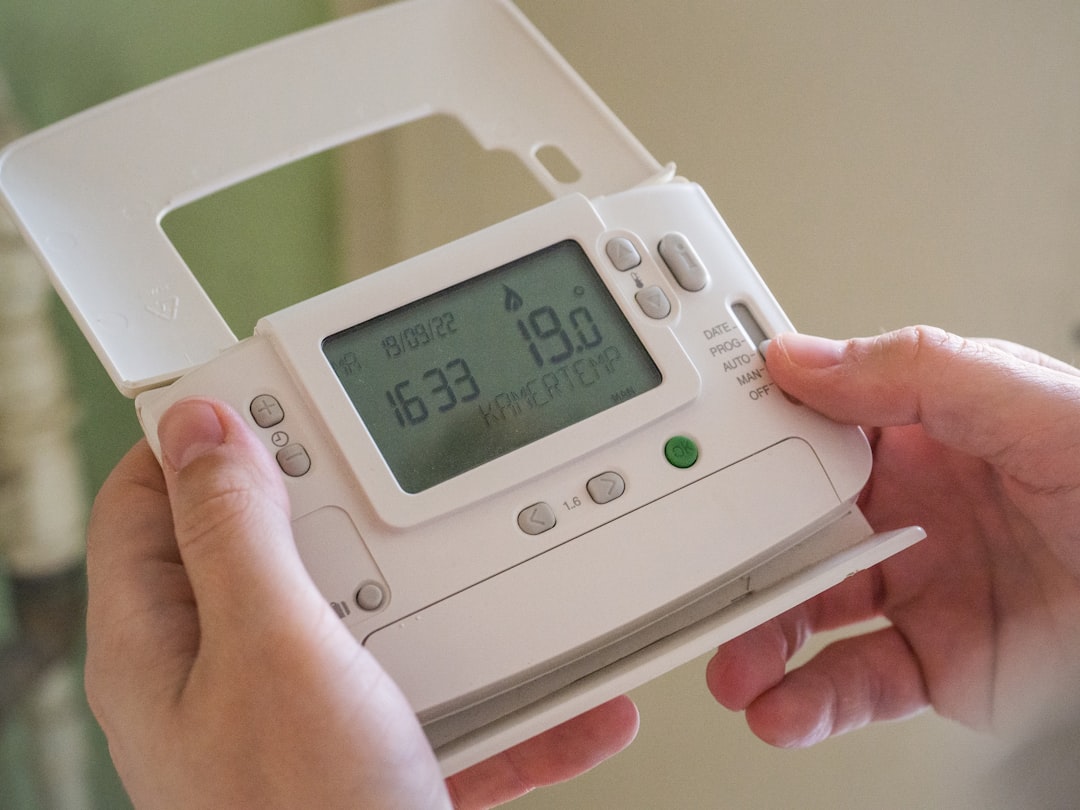
Photo by Arthur Lambillotte on Unsplash
Core Strategies to Lower Your Summer Cooling Costs
Smart Thermostat Setup to Lower Your Summer Electric Bill
The thermostat is the single most impactful tool for cutting cooling costs because it controls runtime and compressor cycles. If your thermostat is manual or outdated, you’re likely over-cooling when no one’s home and running the system at comfortable but expensive setpoints overnight.
A smart thermostat learns your schedule and adjusts automatically. When you leave for work at 8 a.m., it can raise the setpoint 3 to 5 degrees for 8 hours; when you return at 6 p.m., it cools back down. This alone cuts compressor runtime by 10 to 15 percent on most summer days. Overnight, many households can tolerate 78 to 80 degrees, freeing the system from peak-load cooling when outdoor temps are highest.
The Google Nest Learning Thermostat (4th gen) + Nest Temperature Sensor (2nd gen) - Obsidian and ecobee Smart Thermostat Premium are industry-standard smart thermostat options for this reason: both are built to give you greater control over your home’s cooling schedule so you can manage when and how your system runs. The Nest bundle’s included temperature sensor allows the system to take readings from a room of your choice, so the thermostat responds to conditions where you actually spend time rather than relying solely on the unit’s built-in location.
Set your daytime cooling setpoint to 76 to 78 degrees when occupied; most homes can run at 80 degrees or higher while unoccupied without risking heat damage to valuables or mold growth. At night, if you sleep cool, let the thermostat run at 72 to 74 degrees only during your sleep window (typically 10 p.m. to 6 a.m.), then raise it again when you wake. This strategy moves the heavy cooling load to morning and early evening hours, avoiding peak-demand periods in many utilities between 3 p.m. and 7 p.m.
Air Filters and Duct Sealing for Peak Efficiency
A dirty air filter forces your compressor to work harder, increasing runtime and energy use by 5 to 10 percent. Most homeowners replace filters once yearly or less; professionals recommend every 60 to 90 days during cooling season.
Start by checking your filter every 30 days during summer. If it’s gray or clogged, replace it immediately. A clean filter costs $10 to $25 and pays for itself in reduced compressor strain within weeks. Use MERV rating guidance from your system manual or a previous filter to match the same grade, usually MERV 11 to MERV 13 for most residential systems. Higher MERV ratings restrict airflow and can overstress older units, making them less efficient rather than more.
Duct leaks are equally costly. Unsealed connections allow 15 to 25 percent of cooled air to escape before reaching living spaces, forcing the compressor to cycle longer. If you hear air whistling from ducts or feel uneven cooling between rooms, leaks are the likely culprit. Small gaps can be sealed with mastic sealant or metal-backed tape (not cloth duct tape, which degrades quickly in hot ducts). Follow the step-by-step approach for sealing visible duct leaks yourself, focusing on return-air ducts in attics or crawlspaces where leaks have the most impact.
Large leaks or contaminated ducts warrant professional inspection, especially if you notice mold, pest evidence, or collapsed sections. A technician can perform blower-door testing to quantify leakage and recommend repairs that make economic sense. Some utility companies offer rebates for duct sealing, which can offset costs.
Reduce Cooling Costs by Timing Peak Demand Hours
Utilities across North America employ time-of-use (TOU) pricing, where electricity costs 40 to 80 percent more during peak hours, typically 2 p.m. to 8 p.m. on summer weekdays. If your utility offers TOU rates, shifting cooling load outside these windows saves real money on your bill.
A smart thermostat with scheduling capability makes this automatic. Set the thermostat to reach your comfortable setpoint (72 to 74 degrees) by 1:45 p.m., before peak pricing begins. During peak hours, allow the temperature to drift gradually to 76 to 78 degrees, then cool aggressively from 7 p.m. onward when rates drop. This “thermal mass” strategy uses the home’s structure to store coolness and reduces peak-demand charges without sacrificing comfort for more than an hour.
Contact your utility company to confirm whether TOU rates are available and what the peak window is in your region. Many offer incentive programs, including rebates for smart thermostats or seasonal peak-shaving credits that reward off-peak cooling. Some utilities provide free apps that alert you when peak pricing is about to begin, allowing you to adjust your thermostat manually if your system lacks automation. If you’re on flat-rate pricing with no time-of-use component, this tactic doesn’t apply, but efficiency improvements still reduce your bill proportionally.
Window Treatments and Passive Cooling Strategies
Direct sunlight through west and south-facing windows can raise indoor temperatures by 5 to 8 degrees on a clear 95-degree day. Blocking this solar gain eliminates a significant cooling load that your AC must overcome.
Cellular shades or exterior shading (awnings, shade cloth) are most effective because they reflect or absorb heat before it enters the home. Interior thermal-backed curtains offer less impact but still reduce solar gain by 20 to 30 percent. Cost is $150 to $500 per large window; payback occurs within 2 to 4 years on homes in high-cooling climates.
In morning and early evening when outdoor temperatures are lower than indoor, open windows on shaded sides of the home to allow natural ventilation. Close all windows, blinds, and curtains before 9 a.m. when outdoor temps begin rising. This hybrid approach keeps your home naturally cooler during low-temperature periods without burdening the AC. Monitor indoor humidity with a device like the Govee Indoor Hygrometer Thermometer H5075 with Bluetooth App Control to ensure that overnight cooling or fan use doesn’t allow humidity to rise above 60 percent, which can create conditions for mold growth in closed-up homes.
Professional HVAC Maintenance for Summer Efficiency
Before peak summer arrives, have your system tuned by a licensed technician. A proper maintenance visit includes:
- Compressor capacitor testing (failures account for 20 percent of summer breakdowns and force complete system shutdown)
- Refrigerant charge verification (undercharged systems use 10 to 15 percent more energy and cool poorly)
- Evaporator coil cleaning (dust reduces heat transfer efficiency)
- Airflow measurement through the blower motor (blockages or belt wear reduce performance)
- Electrical connection inspection (loose terminals cause efficiency loss and fire hazards)
Schedule this in May or early June, before peak demand peaks in July. Summer emergency calls cost 50 to 100 percent more than scheduled maintenance, and a breakdown during a heat wave leaves you without cooling when outdoor temps are highest and your health is at risk. Maintenance typically costs $150 to $300 and extends system life by 3 to 5 years.
Safety note: If your system uses refrigerant, only licensed technicians should handle it. Do not attempt to add refrigerant yourself. If you suspect a refrigerant leak (system cools poorly despite clean filter and clear ducts), call a professional immediately. Never run an undercharged system for extended periods, as it risks compressor damage. Additionally, ensure your home has functioning carbon monoxide (CO) detectors, especially if you have a gas furnace that may also cool via heat pump or if you plan to have a technician service your equipment indoors.
Your Step-by-Step Summer Cooling Cost-Reduction Action Plan
Follow this sequence to implement changes systematically and track which deliver the biggest impact:
-
Replace your air filter today (cost: $10-25, time: 5 minutes). Check it monthly through September. This is the easiest, fastest savings move. Do not wait for visible dust; many cheap filters bypass dust before looking full.
-
Inspect and seal visible duct leaks (cost: $0-50 for materials, time: 2 hours). Focus on attic or basement ducts where connections are accessible. Use mastic sealant or metal-backed tape on seams and register boots. This cuts waste by 10-15 percent if leaks exist.
-
Install a smart thermostat or optimize your existing one (cost: $0-300, time: 30 minutes installation plus 5 minutes programming). Program a 4 to 6 degree setback during work hours and a 2 to 3 degree reduction at night. If your utility offers TOU rates, align your thermostat schedule to off-peak hours using the utility’s app or your thermostat’s native scheduling.
-
Add window shading to west and south-facing windows (cost: $150-500 permanent, or $30-80 for temporary shade cloth). This is a multi-year investment but eliminates solar load on your highest-cooling days. Even inexpensive roller shades installed on the interior of west-facing windows reduce cooling demand by 20 percent.
-
Schedule preventive maintenance before August (cost: $150-300, time: 1 hour at home). Have a technician check refrigerant charge, capacitors, and coil cleanliness. This ensures peak efficiency and prevents emergency repairs during heat waves when technician availability is lowest.
Implement steps 1 through 3 within one week. Track your electric bill for the next billing cycle and compare it to the same month last year. Most homeowners report 10 to 20 percent savings after completing all five steps.
Common Summer Cooling Mistakes to Avoid
Many homeowners inadvertently waste money and wear out their systems faster through well-intentioned but counterproductive habits.
Over-lowering the thermostat. Setting your thermostat to 68 degrees because you want to cool down faster does not cool the home faster. Your AC runs at full capacity regardless of setpoint; lower settings just keep it running longer. This is the single most expensive mistake homeowners make. Set your target temperature once and let the system work. If you’re too warm at 76 degrees, raise the setpoint by 1 degree and wait 30 minutes for the home to respond, rather than dropping it to 70 degrees and running the compressor for hours.
Running the system constantly without setback. Some homeowners disable all thermostat scheduling and set the system to “on” mode year-round, convinced continuous operation is more efficient than cycling. This defeats the purpose of having a thermostat and increases your bill by 15 to 25 percent. Use auto fan mode so the blower runs only when cooling occurs, and always enable setback during unoccupied or sleeping hours.
Closing supply vents to redirect air. Closing vents in unused rooms sounds logical but actually increases pressure inside ductwork and forces the blower to work harder to push air through remaining open vents. This reduces efficiency by 5 to 10 percent. Leave all accessible vents open unless a professional has balanced your system specifically for multi-zone control.
Ignoring refrigerant leaks. If your system cools to only 80 degrees when set to 72, or if the compressor runs constantly without reaching setpoint, refrigerant charge is likely low. Do not ignore this and do not continue running the system. Low refrigerant forces the compressor to work harder, consuming 10 to 15 percent more energy while delivering less cooling. Continued operation risks compressor failure, which costs $2,000 to $3,500 to replace. Call a technician to pressure-test the system and recharge if needed.
Blocking return-air vents. Return-air vents pull uncooled air back to the system for reconditioning. Blocking these with furniture, curtains, or stored items starves the system of airflow, forcing the blower to strain and the compressor to work longer. Ensure all return-air vents are clear of obstructions and not covered by rugs or decor.
Frequently Asked Questions
Q: Will a smart thermostat reduce my bill if I don’t manually adjust the schedule?
A: Yes, but less dramatically than with active scheduling. Smart thermostats with learning modes (like Nest) observe your behavior and program schedules automatically after 2 to 3 weeks. However, manually customizing your setpoints during work hours and sleep will cut 2 to 4 percent more off your bill. The effort is minimal: most thermostats allow scheduling through their mobile app in under 5 minutes. If your thermostat has geofencing, it can detect when you leave home via your smartphone and automatically apply the away setpoint, cutting runtime without any manual adjustment. Geofencing alone typically saves 5 to 8 percent annually because it eliminates accidental cooling of empty homes.
Q: Is it worth upgrading to a variable-speed air conditioner to cut summer bills?
A: Variable-speed systems cost $3,500 to $7,000 more than standard units and deliver 10 to 15 percent greater efficiency under partial-load conditions (spring and fall). During peak summer when your AC runs at full capacity, the efficiency gain shrinks to 5 to 8 percent because both unit types operate at maximum output. Payback occurs only if your system is already 15 years old, your cooling costs exceed $2,000 yearly, and you plan to stay in your home another 10 years. For most homeowners, thermostat optimization and maintenance yield faster returns on a smaller investment. A smart thermostat costs $250 to $400 and recovers its cost in 1 to 2 cooling seasons.
Q: Should I use a portable air conditioner or window unit to save money?
A: Portable units and window ACs are 20 to 30 percent less efficient than central systems because they lack proper insulation and ductwork design. Use them only to cool a single room while raising the central thermostat setpoint elsewhere. This makes sense if one room (home office, bedroom) is occupied 12 or more hours daily; run the portable unit there and keep central cooling higher in unused spaces. The energy savings depend on the size of your home and the room you’re cooling. For a 1,500 square foot home where one 200 square foot bedroom is occupied, running a portable unit in that room while raising central cooling 5 degrees could save $20 to $50 monthly, though results vary by utility rates and system efficiency.
Q: My utility charges more during peak hours. How much should I tolerate higher temperatures during peak time?
A: Pre-cool your home to 72 degrees before peak hours start (usually 2 p.m.), then set the thermostat to 76 to 78 degrees during the peak window. Most homes don’t climb more than 3 to 4 degrees in a 4-hour window if windows and doors are closed and shaded. Resume cooling at normal setpoint once peak rates end around 8 p.m. This strategy alone saves $15 to $25 monthly if your utility charges peak rates of $0.18 to $0.25 per kWh during peak hours versus flat rates of $0.12 per kWh. Contact your utility for exact peak windows and rates to calculate your potential savings before implementing this approach.
Conclusion
Lowering your summer electric bill doesn’t require replacing your AC system or enduring discomfort. Start with air filter replacement and duct sealing, both of which take minimal time and cost under $50 combined. Add a smart thermostat or reprogram an existing one to lower temperatures during unoccupied hours and sleep windows. If your utility offers peak-demand pricing, align your thermostat schedule to avoid peak hours. Schedule maintenance in May or June to ensure peak efficiency before summer demand peaks.
Track your utility bill over the next two billing cycles and compare it to the same months last year. If you’ve completed all five steps in the action plan, you should see 15 to 25 percent savings. These changes compound: a smart thermostat plus a duct seal plus regular filter replacement doesn’t just add up to 10 percent savings; the combined effect is 20 to 25 percent because each improvement makes the system work more efficiently overall.
Ready to cut your cooling costs? Start today with your air filter and thermostat schedule. Bookmark this page and revisit your setpoints each month through September.
Related Reading
For deeper guidance on maintaining your system through summer, read our full HVAC Annual Maintenance Checklist to ensure your system stays efficient all season long. You may also find value in learning how to monitor and improve home air quality while cooling efficiently.
Additional resources from trusted authorities:
- U.S. Department of Energy: Air Conditioning and Heat Pumps provides science-backed guidance on cooling efficiency and thermostat scheduling.
- EPA Energy Star: Most Efficient Air Conditioners lists certified high-efficiency units and explains how to compare cooling performance across models.