SEER Ratings Explained: What They Mean for Your Energy Costs
This post contains affiliate links. As an Amazon Associate, I earn from qualifying purchases at no extra cost to you.
Understanding SEER Ratings and Your Energy Bills
Your air conditioning system is likely one of the largest energy consumers in your home, accounting for 40-60% of summer electricity use depending on your climate and usage patterns. When you’re shopping for a new AC unit or evaluating whether to replace an aging system, you’ll encounter the term “SEER rating”—and it directly affects how much you’ll spend to cool your home over the next 15-20 years.
SEER ratings aren’t marketing jargon. They’re a standardized measure that allows you to compare the real efficiency difference between two air conditioning units and make informed decisions about your cooling investment. But understanding what a SEER rating actually tells you - and what it doesn’t - is crucial. A unit rated SEER 16 will cost significantly less to operate than a SEER 10 unit, but the actual savings depend on where you live, how your home is built, and how you use your thermostat.
This guide walks you through SEER ratings from first principles, explains how to translate ratings into real energy costs, and helps you determine whether upgrading to a higher-efficiency system makes financial sense for your situation.
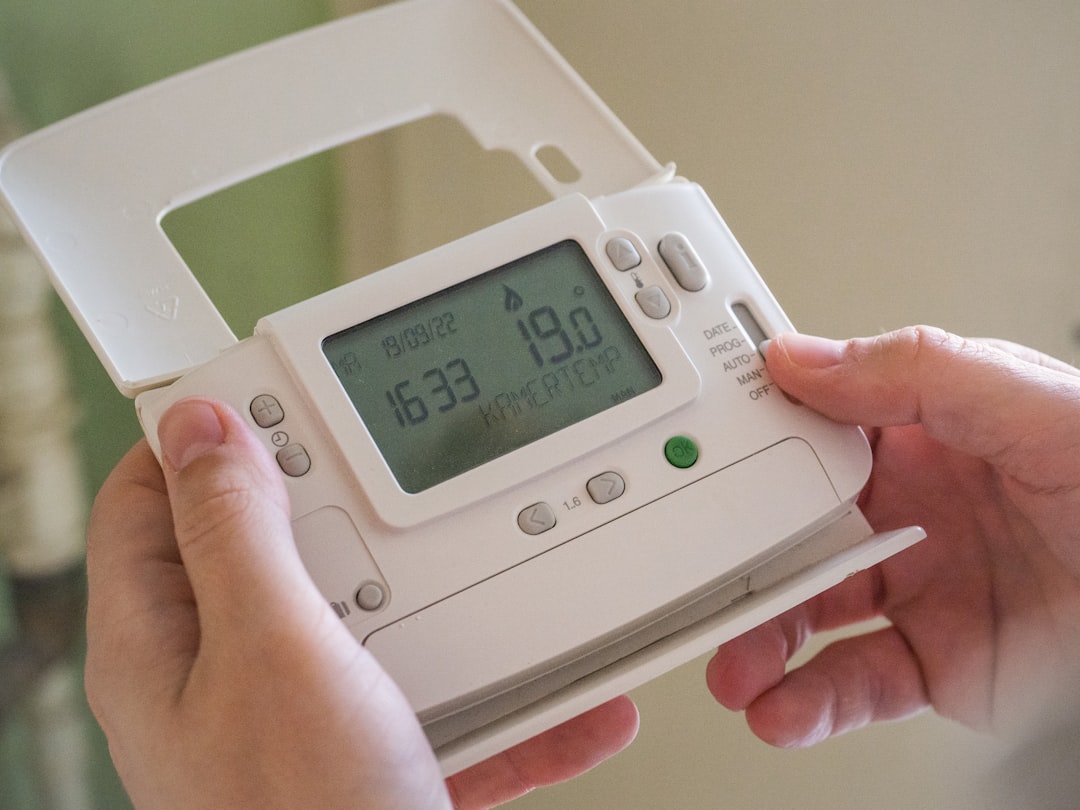
Photo by Arthur Lambillotte on Unsplash
What SEER Rating Means and How It’s Calculated
SEER stands for Seasonal Energy Efficiency Ratio. It’s the ratio of cooling output (measured in BTU, or British Thermal Units) divided by the energy input (measured in Watt-hours). In practical terms: the higher the SEER number, the more cooling you get per unit of electricity consumed.
The EPA and Department of Energy standardized SEER testing under specific conditions defined by the Air-Conditioning, Heating, and Refrigeration Institute (AHRI). The test simulates a cooling season using a weighted average of temperatures ranging from 60°F to 100°F, reflecting the mix of cooling demands across a typical summer. The system runs at full load during hot periods and partial load during moderate temperatures, mirroring real-world use patterns across diverse climates.
A SEER rating of 16, for example, means that for every watt-hour of electricity the system consumes, it delivers 16 BTU of cooling. A SEER 10 system delivers only 10 BTU per watt-hour. That 37.5% efficiency advantage in the SEER 16 unit translates directly into lower monthly electricity bills, assuming the rest of your system (ductwork, insulation, thermostat) is equivalent.
Minimum SEER requirements have tightened significantly over the past two decades. Systems installed before 2006 typically had SEER ratings of 8-10. The 2006 federal minimum jumped to 13 SEER. In 2023, new minimums rose to 14 SEER in most of the United States (15 SEER in high-efficiency regions). By 2027, minimums are expected to reach 15-16 SEER nationwide, reflecting improving technology and environmental mandates to reduce residential cooling’s carbon footprint.
What SEER doesn’t measure is heating efficiency (that’s covered by HSPF for heat pumps) or how your specific unit will perform in your specific home. Your actual energy consumption depends on factors outside the SEER test: climate, home insulation, duct leakage, thermostat programming, and seasonal temperature swings in your location.
SEER2: The New Standard and What Changed
In 2023, the DOE introduced SEER2, an updated efficiency rating that reflects more realistic testing conditions. SEER2 uses lower test temperatures and accounts for ductwork losses that the original SEER rating ignored. The practical result: SEER2 ratings are roughly 20% lower than SEER ratings for the same unit.
A unit rated SEER 16 under the old standard is approximately equivalent to SEER 13 under the new SEER2 standard. This doesn’t mean the unit became less efficient - it’s simply a different measurement method. However, the lower SEER2 numbers can create confusion when comparing new equipment to older specifications or reviewing contractor marketing claims.
For homeowners reading AHRI certification documents or reviewing quotes, here’s the key distinction: all new equipment comes with SEER2 ratings as of 2023. If you’re comparing a 2023+ system to an older quote that only lists SEER, multiply the SEER number by approximately 0.80 to estimate the SEER2 equivalent. Conversely, SEER2 ratings are more conservative and more representative of real-world performance than the older SEER standard.
HSPF (Heating Seasonal Performance Factor) measures heating efficiency for heat pump systems. HSPF2 is the updated standard. If you’re installing a heat pump for both heating and cooling, evaluate both SEER2 and HSPF2 ratings to understand your year-round efficiency gains.
How SEER Ratings Translate to Your Monthly Energy Bills
This is where SEER ratings become personally relevant. Let’s work through a concrete example.
Assume you have a 3-ton AC system (the most common residential size). The Department of Energy publishes cooling demand estimates based on climate zone. In a moderate cooling climate (roughly 1,500 peak cooling hours annually), a SEER 10 system running full capacity during those peak hours consumes approximately 4,500 kWh per cooling season.
At an average U.S. electricity rate of 14 cents per kWh (higher in some states, lower in others), that’s about $630 per cooling season, or roughly $100 per month during summer months.
The same 3-ton unit with SEER 16 efficiency would consume approximately 2,812 kWh for equivalent cooling. At 14 cents per kWh, that’s $394 per cooling season, or about $65 per month.
The annual difference is $236. Over 15 years (a typical AC lifespan), that’s $3,540 in direct energy savings - before accounting for electricity rate increases, which historically average 2-3% annually.
In hotter climates with 2,000-2,500 annual cooling hours, the savings are proportionally larger. In mild climates with fewer than 1,000 cooling hours, energy savings from upgrading to higher SEER are more modest.
Real monthly savings also hinge on factors beyond the SEER rating itself:
- Whether your current system runs efficiently (leaking ducts and clogged filters reduce actual efficiency below rated SEER)
- Thermostat programming (a smart thermostat can help reduce cooling costs through better scheduling)
- Home insulation and air sealing (poor insulation requires more AC runtime to maintain comfort)
- Window treatments and external shading
- Heat-generating appliances and occupant behavior (cooking, lighting, number of people home during peak heat)
To estimate your specific savings, use the Department of Energy’s energy cost calculator with your local electricity rates, annual cooling hours, and system size.
Why Real-World Efficiency Doesn’t Always Match Rated SEER
A unit rated SEER 16 will not deliver that efficiency if your ductwork is leaking, your filter is clogged, or your outdoor unit is blocked by debris. SEER ratings assume clean equipment and properly sealed ducts - conditions that don’t always exist in older homes or homes with deferred maintenance.
Studies from the Lawrence Berkeley National Laboratory and NREL demonstrate that homes with ductwork losses of 15-20% (common in older systems) experience actual efficiency 15-20% lower than the unit’s rated SEER. A SEER 16 system becomes a practical SEER 12-13 if your ducts are leaking at that level. This gap is why SEER2’s inclusion of ductwork losses in the test standard represents a more honest efficiency measurement.
An outdoor condenser unit shaded by tall grass, leaves, or debris must work harder to reject heat. Keeping the area around the unit clear of vegetation and obstructions helps maintain efficiency. Protecting your outdoor unit from seasonal debris and weather damage - both during cooling season and winter - preserves its efficiency. A weatherguard like the Trane WEATHERGUARD™ Top Kit can help shield the unit from seasonal weather and debris that would otherwise block airflow and reduce efficiency.
Maintenance directly impacts real-world SEER. Dirty evaporator coils reduce heat transfer, and a clogged or restrictive return-air filter forces the blower to work harder against resistance. Refrigerant undercharge is particularly harmful: even a 10% shortfall in refrigerant charge reduces efficiency by 10-20% and stresses the compressor.
This is why upgrading to a high-SEER unit in a home with poorly sealed ducts, blocked vents, or deferred maintenance is economically inefficient. You’re paying for rated efficiency you can’t actually achieve. Before upgrading the AC unit itself, consider duct sealing and cleaning, air leakage sealing, and replacing or upgrading your thermostat to optimize the efficiency you already have.
Calculating Whether a Higher-SEER Upgrade Pays for Itself
The decision to replace an aging AC system with a higher-SEER alternative requires a straightforward payback calculation. Here’s how to evaluate the financial case:
-
Identify the cost difference. A SEER 14 system typically costs $500-800 more than a minimum-code SEER 13 unit for the same capacity. A SEER 16-18 system costs $1,500-2,500 more. Document the installed price quote for each efficiency option from your contractor.
-
Calculate annual energy savings using your climate and utility rates. Using the DOE calculator or your contractor’s load-calculation software, estimate kWh consumption for each SEER level. Multiply the kWh reduction by your electricity rate. For example, upgrading from SEER 13 to SEER 16 in a moderate climate might save $150-250 per year.
-
Divide the cost difference by annual savings to find the payback period. If a SEER 16 upgrade costs $2,000 more and saves $200 per year, the payback is 10 years. If the system has a 15-20 year lifespan, that’s a reasonable investment. If the payback is 15+ years, the upgrade may not be worthwhile unless you plan to stay in the home for the full period or regional electricity rates are expected to spike significantly.
-
Account for tax credits and rebates. Federal tax credits (up to 30% of equipment cost for high-efficiency heat pumps under current law) and state or utility rebates can significantly improve payback timelines. Check current incentives in your area before finalizing the cost difference.
-
Consider non-energy benefits alongside savings. Higher-SEER systems often have improved reliability, quieter operation, and better humidity control in addition to efficiency gains. Weighing those benefits against energy savings provides a more complete picture than utility costs alone.
Common Mistakes When Evaluating SEER Ratings
A frequent mistake homeowners make is assuming that upgrading from SEER 10 to SEER 16 will reduce cooling bills by exactly 37.5%. In practice, real-world savings are usually 20-30% lower because multiple factors dilute the theoretical efficiency advantage.
Oversizing the system based on SEER alone. A high-SEER unit that’s oversized for your home will cycle on and off frequently, running in partial-load mode where efficiency drops significantly. A properly sized unit at lower SEER often delivers better real-world efficiency than an oversized high-SEER system. Your contractor should perform a room-by-room load calculation (Manual J per ASHRAE standards) before recommending system size, not default to the capacity of your old unit. Oversizing also increases initial cost, extending payback periods.
Ignoring ductwork condition before upgrading. Installing a SEER 16 unit in a home with uninsulated ducts in an unconditioned attic, leaky connections, or blocked return vents wastes the efficiency investment. Ducts should be sealed, insulated, and tested for leakage (duct blaster test per ASHRAE 152) before or simultaneously with AC replacement. Duct sealing and insulation alone can recover 10-15% of efficiency loss and is often a higher-ROI upgrade than replacing a working outdoor unit.
Not accounting for thermostat control. Many homeowners with high-SEER systems still operate them inefficiently. Setting the thermostat to 70°F all day during summer, even when away from home, eliminates much of the SEER advantage. A smart thermostat is essential to realize the efficiency gains. Smart thermostats can help recover energy costs through automated scheduling and temperature adjustments.
Conflating SEER with total system efficiency. SEER measures the compressor and condenser only. A SEER 16 outdoor unit paired with a leaky, undersized duct system or an old, inefficient indoor furnace and air handler will underperform significantly. Total system efficiency includes indoor unit efficiency, ductwork design and condition, and control strategies. Request AHRI matching documents that certify the specific indoor and outdoor unit combination, not just the condenser SEER rating.
Failing to maintain the new system. After a new AC installation, homeowners sometimes neglect annual maintenance. A SEER 16 system without annual inspections, filter changes, and coil cleaning degrades in efficiency by 2-3% per year due to refrigerant microleaks and coil fouling. Budget for annual professional maintenance ($150-300) as part of the true cost of ownership.
Overlooking refrigerant type and future availability. Older refrigerants like R22 are being phased out due to ozone depletion potential. HVAC systems must transition to R410A or newer low-GWP refrigerants. Verify that your contractor specifies a refrigerant that will remain available for potential recharges during the system’s lifespan. Some newer low-GWP refrigerants like R32 have superior efficiency ratings but require specialized contractor certification and equipment.
Frequently Asked Questions
What’s a good SEER rating to target when replacing an AC unit?
For most homeowners, SEER 14-16 offers a reasonable balance between cost and efficiency gain. The payback period for SEER 16 systems is typically 8-12 years in moderate-to-hot climates with 1,500+ annual cooling hours. In mild climates with fewer than 1,000 cooling hours, SEER 14 is often sufficient because absolute energy savings are smaller and payback extends beyond 12 years. If you plan to stay in the home for 15+ years and your climate experiences more than 2,000 annual cooling hours, SEER 16 or higher becomes more attractive financially. Very high-efficiency systems (SEER 18+) appeal primarily to homeowners prioritizing environmental impact or those in very high-electricity-cost areas (California, Hawaii, the Northeast) where payback periods are compressed.
Can I add a high-SEER condenser to my existing furnace without replacing the whole system?
Technically, yes - contractors can replace the outdoor condenser unit and indoor evaporator coil while retaining the furnace cabinet and blower. However, AHRI certification requires that the specific condenser and indoor coil combination be matched and certified together. Your existing furnace cabinet and blower may limit the efficiency potential of a modern high-SEER condenser due to airflow restrictions or control incompatibility. Additionally, if your furnace is over 15 years old, replacing only the cooling side while the heating system ages separately often results in needing full replacement within a few years. Most contractors recommend full system replacement for cohesive efficiency, consistent warranty coverage, and optimal control integration.
How does a heat pump’s SEER2 rating compare to a traditional AC unit?
Heat pumps and traditional AC units have comparable SEER2 ratings when both are modern high-efficiency models. The advantage of a heat pump is that it adds HSPF2 (Heating Seasonal Performance Factor 2) for winter heating efficiency - something a traditional AC unit with furnace backup doesn’t provide. In cold climates, a quality heat pump with HSPF2 8-10 can reduce heating costs by 30-50% compared to electric resistance heat or backup propane. In mild climates where heating is minimal, the HSPF2 advantage is less meaningful. Compare total cost of ownership for both heating and cooling seasons when evaluating heat pumps, not SEER2 alone.
Does sealing my ducts improve a system’s SEER rating?
Duct sealing doesn’t change the unit’s SEER rating - the rating is fixed by the manufacturer based on standardized test conditions. However, sealing ducts dramatically improves your actual experienced efficiency by reducing the gap between rated SEER and real-world SEER. If your ducts leak 20% of conditioned air into an unconditioned space, a SEER 16 system effectively delivers only SEER 12.8 efficiency to your living spaces. Sealing ducts to leakage below 5% recovers most of that lost efficiency. Duct sealing and insulation is often one of the highest-ROI efficiency upgrades a homeowner can make, with payback periods under 5 years in homes with significant leakage.
Will upgrading my AC to high-SEER significantly reduce my summer electric bill?
Expect a 20-35% reduction in your AC-related cooling costs when upgrading from a SEER 10 system to a SEER 16 system, assuming proper installation, duct sealing, and maintenance. Your total summer electric bill may decline 15-25% depending on the proportion of your electricity used for cooling versus other loads like water heating, appliances, and lighting. In climates where AC runs heavily (Phoenix, Houston, Las Vegas), a high-SEER upgrade can reduce summer bills by $50-150 per month. In mild climates, the reduction may be $10-30 monthly. Calculate your specific savings using the DOE’s tool with your current system SEER rating, new system SEER2 rating, and local electricity rate per kWh.
Taking Action on Your Cooling Efficiency
SEER ratings give you a standardized way to compare AC efficiency and forecast energy cost differences, but they’re one factor among many. A high-SEER unit installed in a home with poor insulation, leaky ducts, and outdated controls won’t deliver its rated efficiency. Before upgrading your AC, invest in duct sealing, air barrier improvements, and a smart thermostat to maximize the efficiency of your existing system and prepare your home for a future high-SEER upgrade.
When you are ready to replace your unit, get detailed load calculations from your contractor, request AHRI certification documents for the specific equipment combination, and calculate the payback period for each efficiency tier before deciding. Pair a high-SEER condenser with proper ductwork, annual maintenance, and smart controls, and you’ll achieve close to the efficiency gains the SEER rating promises.
Bookmark this guide for your next AC replacement conversation with a contractor - you’ll negotiate from a position of understanding.