HVAC rebates and tax credits homeowners should know about
This post contains affiliate links. As an Amazon Associate, I earn from qualifying purchases at no extra cost to you.
HVAC upgrades carry a hefty price tag. A new furnace, heat pump, or central air system can run $5,000 to $15,000 installed. But most homeowners don’t realize that federal tax credits, rebates, and incentive programs can offset 20 to 50 percent of that cost. The money is there if you know where to look and how to claim it.
Since the Inflation Reduction Act passed in 2022, federal incentives for HVAC upgrades have expanded dramatically. Manufacturers are running rebate programs. State and local governments are offering additional incentives. Utility companies are paying homeowners to upgrade. Energy Star rebates apply to high-efficiency equipment. And you may be able to combine multiple programs at once.
The catch: these programs have deadlines, eligibility requirements, and documentation rules. Miss a deadline or file paperwork incorrectly, and you lose the money. The opportunity window is real, but you need a strategy.
This guide walks you through every major rebate and tax credit available to HVAC homeowners in 2026, how to qualify, and how to stack them for maximum savings.
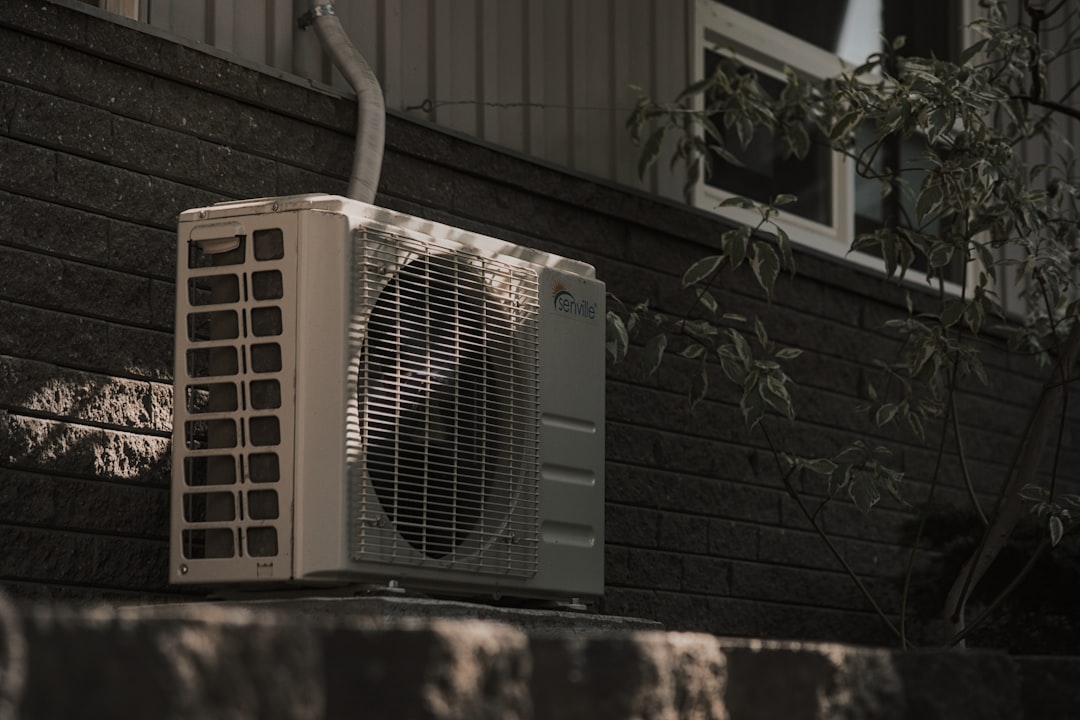
Photo by Everett Pachmann on Unsplash
Federal Tax Credits and Rebates for HVAC Equipment
The federal government offers tax credits under Section 25D (residential energy credits). For most residential HVAC work, you’ll use Section 25D, which was expanded and enhanced under the 2022 Inflation Reduction Act.
As of 2026, Section 25D allows you to claim a credit of up to 30 percent of the cost of installing certain HVAC equipment. The catch: not all equipment qualifies. You must install a heat pump (including air source, ground source, or ductless mini-split), central air conditioning, or a furnace that meets Energy Star Most Efficient specifications. Traditional gas furnaces alone don’t qualify for the full credit, but a heat pump replacing an old furnace does. Standalone air conditioning units also qualify if they meet Energy Star efficiency thresholds.
The IRS applies annual limitations per category: $3,200 per year for heat pump installation, $2,000 for heat pump water heaters, $2,000 for electric panel upgrades, and $1,200 for home energy audits. These are per-year limits, not per-household limits. If you exceed the cap one year, the remainder carries forward to future years, so you don’t lose the money entirely - you simply defer claiming it to a subsequent tax year.
Income limits do apply and significantly affect eligibility. Single filers with modified adjusted gross income (MAGI) above $150,000 and married filing jointly above $300,000 begin to phase out the credit. The credit disappears completely at $200,000 and $400,000 respectively. This is a hard cutoff; if your MAGI is $200,001 as a single filer, you receive zero federal tax credit. If your income is within these ranges, confirm your eligibility with a tax professional or the IRS website before assuming you qualify.
Documentation is critical. You must retain the contractor’s itemized invoice showing the make, model, serial number, and rated efficiency of the equipment (typically SEER2, HSPF2, or AFUE ratings). The manufacturer must certify on the nameplate or specification sheet that the product meets applicable efficiency standards. You’ll file IRS Form 5695 with your tax return. Have everything organized and backed up before April 15 of the following year. The IRS has audited HVAC tax credits at higher rates in recent years, so documentation accuracy is essential.
Energy Star Rebates and Manufacturer Programs
Beyond the federal tax credit, Energy Star maintains a rebate finder tool that lists active manufacturer and retailer rebates. These programs change frequently, but you can typically find rebates of $300 to $1,500 on qualifying equipment. The best rebates often appear in spring and early fall when contractors and homeowners are most active.
Manufacturers like Lennox, Carrier, Trane, and Rheem run ongoing rebate programs for high-efficiency furnaces, air conditioners, and heat pumps. The rebate is usually applied at the point of sale (instant rebate) or via mail-in form (typically 4-8 weeks processing). Some programs stack with federal tax credits; others do not. A manufacturer may run two separate rebate programs - one that stacks with federal credits and one that doesn’t. Always ask your contractor in writing whether the specific rebate on your equipment is stackable with federal and state credits.
Smart thermostats also qualify for rebates. A qualifying smart thermostat may be eligible for manufacturer and utility rebates in most states. The ecobee Smart Thermostat Premium, Google Nest Learning Thermostat (4th gen), and Honeywell Home T9 WiFi Smart Thermostat are among the popular smart thermostat options that may qualify for additional incentives depending on your location. When installed by a professional, installation adds to the upfront cost, but with rebates stacked, your net cost can be significantly reduced.
Check the Energy Star website for current rebates before purchasing. Rebate programs often have end dates or limited funding pools. A program available in July may be exhausted by October. Early in the year (January through March) typically offers the widest selection of active programs.
State and Local Incentive Programs
Every state runs its own energy incentive programs, and many have dedicated funding specifically for HVAC upgrades. These are often more generous than federal credits and may not have the same income restrictions that can disqualify higher earners.
Connecticut, Massachusetts, New York, and California have particularly robust programs offering rebates up to $4,000 for heat pump installation, with additional incentives for contractors. Texas and Florida have utility-specific programs that can add $1,000 to $2,000 on top of federal credits. Some states limit programs to low-income households (typically below 80% area median income), while others offer them to all residents regardless of income. Eligibility varies significantly by state, so verification is essential.
Finding your state’s program requires effort, but the payoff justifies it. Start with your state energy office by searching “[your state] energy office” in your web browser, or call your state’s department of energy. ENERGY.gov’s state programs database also lists active incentive programs by state. You can also call your utility company directly and ask for HVAC incentive programs - utility representatives often know about programs that don’t appear on state websites. Local government offices, weatherization assistance programs, and community action agencies often maintain current lists as well.
Timeline matters significantly. Some state programs have annual funding caps and close when money runs out. Contact your state program in January or February rather than waiting until fall when many programs are depleted. Some states operate on fiscal years ending in June, making their programs more generous in spring. Plan accordingly.
Utility Company Rebates
Your electric or gas utility likely offers rebates that most homeowners never discover. These programs vary wildly by utility, but common incentives include heat pump rebates ($500 to $3,000), central air conditioning rebates ($300 to $1,500), furnace rebates ($200 to $1,000 for high-efficiency models), and smart thermostat rebates ($50 to $300).
Call your utility directly and ask specifically about heating and cooling rebates. Many utilities maintain a website listing current programs, but calling often uncovers programs their website doesn’t advertise. Ask about instant discounts applied at point of sale, mail-in rebates requiring documentation after installation, contractor partnerships where pre-approved contractors offer automatic rebates, and time-of-use incentives if you install a smart thermostat participating in demand-response programs. Also inquire about special funding for low-income households or multifamily properties.
Coordinate with your contractor to determine which rebate combination produces the highest total incentive. Your contractor should model both scenarios before you purchase equipment.
Strategic Optimization: Combining Rebates and Tax Credits
Most homeowners can claim multiple rebates and credits simultaneously, but stacking requires planning. Here’s a comparison table showing how different programs interact:
| Rebate Type | Timeline | Claim Method | Stacks With Others? |
|---|---|---|---|
| Federal tax credit (Section 25D) | File with tax return (April 15 following year) | IRS Form 5695 | Yes, with most programs |
| Manufacturer rebate | Typically 30-90 days after purchase | Mail-in form or instant at point of sale | Check with contractor - varies by program |
| Energy Star rebate | Varies by program (30-180 days) | Mail-in or instant | Usually yes with federal credit |
| State/local rebate | Varies (often 60-180 days) | Mail-in or online portal | Verify with program - some exclude other rebates |
| Utility rebate | 30-120 days after installation | Mail-in or automatic | Check with utility - some exclude manufacturer rebates |
Follow this numbered process to maximize your returns and avoid claiming the same incentive twice:
-
Contact your utility 6-8 weeks before purchasing. Ask about all available HVAC rebates and whether programs require pre-approval or contractor pre-registration. Many utilities need written approval before installation to guarantee the rebate. Request all rebate documentation in writing, including deadlines and stacking rules.
-
Check your state energy office. Verify your state offers rebates and what equipment qualifies. Confirm income limits and firm deadlines. Some state programs close abruptly when funding is exhausted. Ask about income-based tiers if your household income qualifies for enhanced incentives.
-
Request rebate details from your HVAC contractor in writing. Ask which rebates apply to your specific equipment model and whether they’re registered with Energy Star, your state program, and your utility rebate program. If they’re not registered, they may not be able to claim certain rebates on your behalf.
-
Confirm the equipment meets Energy Star Most Efficient standards. Review the nameplate or specification sheet provided by the manufacturer. Cross-reference the model number against Energy Star’s database. Not all Energy Star equipment qualifies for all rebates - some programs require “Most Efficient” designation, not just “Energy Star certified.”
-
Verify income eligibility for the federal tax credit. Calculate your modified adjusted gross income (MAGI) for the tax year you’re claiming the credit. If your MAGI falls within the phase-out range, consult a tax professional to determine your exact credit amount.
-
Document everything before installation. Keep invoices, spec sheets, efficiency ratings, manufacturer certification documents, and serial numbers. Take photos of the installed equipment showing the nameplate and serial number. Create a folder and scan everything for backup.
-
File rebate applications in order of their deadlines. Mail-in rebates often close first (30-90 days post-installation). Federal tax credits can be filed next April. Don’t miss deadlines - most programs have no grace periods. Set reminders on your calendar 30 days before each deadline.
-
Consult a tax professional if claiming federal credits. If your income is near the federal threshold or you’re claiming multiple credits, verify you’re eligible and correctly calculating the credit. Tax professionals often identify stacking opportunities that increase your total incentives.
Common Rebate Mistakes to Avoid
The gap between the rebate you expect and the rebate you actually receive often comes from preventable errors. Understanding these mistakes helps you claim your full incentive amount.
Mistake 1: Purchasing before confirming eligibility. Many homeowners buy equipment and then discover it doesn’t meet the program’s efficiency requirements. This is especially common with furnaces, where only Energy Star Most Efficient models qualify for federal credits, not all Energy Star furnaces. Verify the exact model qualifies before signing the contract. Ask your contractor for the specific Energy Star rating or SEER2/HSPF2/AFUE ratings, then cross-reference them against the program requirements on the Energy Star website.
Mistake 2: Not pre-registering with your utility or state program. Some programs require you to register before purchase or installation. If you miss this step, the rebate is forfeited even if you installed qualifying equipment. Call your utility and state program one month before scheduling installation and ask explicitly if pre-approval is required. Get confirmation in writing via email.
Mistake 3: Hiring an uncertified contractor. Some rebates require the contractor to be certified or registered with the program. If you hire an uncertified contractor, you lose the rebate even if the equipment qualifies. Ask contractors whether they’re registered with Energy Star, your state program, and your utility rebate program before hiring. This single decision can cost you $500 to $2,000 in lost rebates.
Mistake 4: Missing mail-in deadlines. Manufacturer and utility mail-in rebates typically have 60-to-90-day windows from installation. File rebate paperwork within 30 days of installation, not on day 89. Mail delays and processing backlogs mean that applications arriving close to the deadline often miss the window.
Mistake 5: Losing documentation. Federal tax credits require proof of the equipment’s efficiency rating, installation date, and cost. If you discard the invoice or spec sheet, you can’t file the credit. Create a folder and store all documents for seven years. Scan everything to cloud storage for redundancy.
Mistake 6: Assuming everything stacks. Not all rebates combine. Some manufacturers explicitly exclude equipment already receiving utility or state rebates. Your contractor can clarify, but don’t assume - ask in writing before installation.
Mistake 7: Overlooking income-based programs. Some state and utility programs offer higher rebates to low-income households. If your income qualifies (typically below 80% area median income), you may get 50 percent rebates instead of 20 percent. Check your state and utility websites for income-based tiers.
Frequently Asked Questions
Q: If my income is slightly above the federal tax credit limit, do I still qualify?
A: No. The federal credit phases out at specific income thresholds. If your modified adjusted gross income exceeds $200,000 (single filers) or $400,000 (married filing jointly), you don’t qualify for the federal Section 25D credit - the credit is completely eliminated, not just reduced. However, you may still qualify for state, utility, or manufacturer rebates, which typically don’t have income limits. Check your state program and call your utility to explore those options.
Q: Can I claim the federal tax credit and a manufacturer rebate for the same equipment?
A: Yes, in most cases. The federal tax credit is a tax deduction filed on Form 5695, while manufacturer rebates are discounts on the purchase price. However, some manufacturers exclude equipment already receiving state rebates or utility rebates. Read the fine print of your manufacturer’s rebate terms carefully. Always ask your contractor whether the manufacturer rebate can be combined with federal and state credits. Have them confirm in writing before purchase.
Q: How long does it take to receive rebates?
A: Federal tax credits appear on your tax return and refund (typically 2-4 weeks after filing electronically). Instant manufacturer rebates are applied at the point of sale. Mail-in rebates typically take 4-8 weeks after submission. Utility rebates vary widely but typically arrive within 60 days, though some programs take up to 120 days. State rebates vary considerably by program. Plan for all money to arrive within 5-6 months of installation.
Q: Does installing a smart thermostat alone qualify for federal tax credits?
A: No. A standalone smart thermostat doesn’t qualify for Section 25D federal credits. However, it does qualify for Energy Star manufacturer rebates ($100-$300) and utility rebates in most states ($50-$300). If you’re installing a new heat pump or furnace at the same time, the thermostat can be bundled with that equipment to improve overall efficiency and support your federal credit claim. Many contractors include smart thermostat installation as part of a larger HVAC upgrade specifically to maximize rebates on the entire system.
Q: What’s the difference between Energy Star and Energy Star Most Efficient?
A: Energy Star certified means equipment meets baseline efficiency standards set by the EPA. Energy Star Most Efficient is a higher tier - equipment must rank in the top 10-15% of all models for efficiency. Federal tax credits often require Most Efficient designation, not just Energy Star certification. Check the Energy Star label or specification sheet to determine which tier your equipment achieves. This distinction is critical for federal credit eligibility and commonly causes rebate rejections.
Conclusion
The difference between paying $12,000 for a new HVAC system and paying $7,000 is often the difference between knowing where to look for rebates and not knowing. Federal tax credits, manufacturer rebates, state incentives, and utility programs can legitimately cut your out-of-pocket cost in half.
The key is starting early. Contact your utility and state program 4-6 weeks before you plan to purchase. Confirm which rebates apply to your situation and whether they stack. Choose a contractor registered with the relevant programs. Document everything. Follow deadlines. And don’t assume - ask in writing and keep confirmation emails.
Rebates aren’t automatic. They require effort and attention to detail. But for a $10,000-plus investment, the effort pays thousands of dollars back.
Ready to explore your rebate options? Start by calling your utility company today and asking what HVAC rebates they offer. Then contact your state energy office. Those two calls often unlock $2,000 to $4,000 in incentives you didn’t know existed.
For more on choosing efficient HVAC equipment, see our guides on Energy Star ratings and what they mean and heat pump versus furnace total cost comparison.
Bookmark this guide for the next time you work through hvac rebates and tax credits homeowners should know about, and use the related resources below to keep improving your setup. —