HVAC Noise Problems: What's Normal and When to Worry
This post contains affiliate links. As an Amazon Associate, I earn from qualifying purchases at no extra cost to you.
Your furnace clicks on in the middle of the night and makes a sound that pulls you awake. Your AC compressor hums with a rhythmic whine. Your ducts pop and creak as air moves through them. Is that normal? Or is your HVAC system trying to tell you something is broken?
Most homeowners can’t tell the difference between routine operating noises and warning signs that require professional intervention. That uncertainty leads to either unnecessary panic or, worse, ignoring real problems until they become expensive repairs. The truth is that HVAC systems make noise by design, but some sounds indicate mechanical failure, loose components, or ductwork problems that won’t fix themselves.
This guide will help you decode the sounds your system makes, identify which ones demand immediate action, and understand what can wait or be solved with basic maintenance. You’ll learn how to listen for the distinction between normal and problematic HVAC noise, and when calling a technician is the right decision rather than an overreaction.
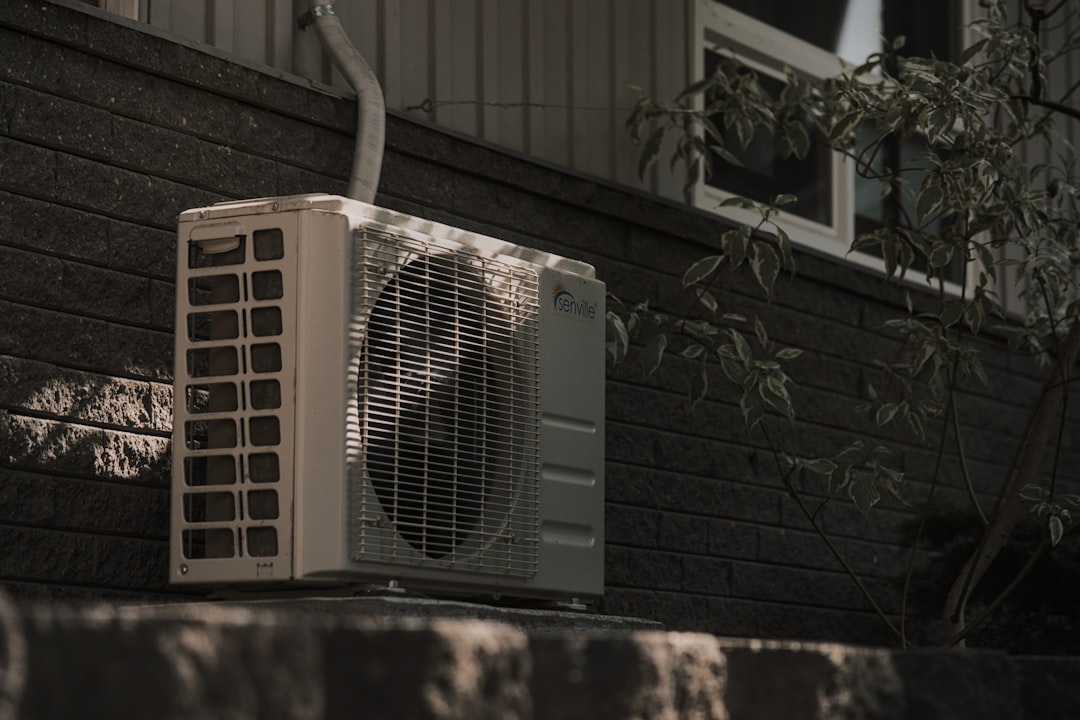
Photo by Everett Pachmann on Unsplash
Normal HVAC Noise vs. Problem Sounds
The decibel level of normal HVAC operation typically ranges from 50 to 65 decibels, roughly equivalent to a quiet conversation or light background music. According to ASHRAE design guidance, residential systems should ideally operate at 50 dB or lower, though this varies based on unit age, installation quality, and ductwork configuration.
Expected sounds from a functioning system include:
- Soft humming from the indoor blower motor as it circulates air
- Clicking when the thermostat signals the system to start or stop
- Whooshing of air moving through supply ducts once the blower is running
- Minor rattling from flexible ductwork during the first few seconds after startup
- Faint grinding from the compressor during the first few minutes of the AC cooling cycle
Problem sounds that demand attention include:
- Loud banging or clanging that persists during operation
- Squealing that sounds like metal-on-metal friction
- Rattling that continues throughout the entire cycle rather than just at startup
- Grinding or scraping that suggests loose internal components
- Hissing near refrigerant lines, which indicates a leak
- Popping sounds that occur repeatedly during heating cycles
The key distinction is consistency and intensity. Normal sounds start and stop with the equipment cycle and remain at moderate volume. Problem sounds either escalate during operation or persist irregularly, suggesting mechanical wear, component failure, or installation issues.
Furnace Banging and Popping: When Heating Noise Is Serious
Furnaces produce heat through combustion or electrical resistance, and that process involves thermal expansion of metal components. Some popping and clicking is expected as the heat exchanger warms and expands during the heating cycle, then contracts again as the system cools down.
Moderate popping that occurs in the first 30 seconds after the furnace ignites is typically harmless thermal expansion. However, repeated loud banging during operation or persistent popping throughout the cycle signals one of several problems:
Delayed ignition is the most common cause of loud banging in gas furnaces. If the pilot light or igniter isn’t functioning properly, gas accumulates in the combustion chamber before ignition. When ignition finally occurs, the sudden expansion of that excess gas creates a loud bang. This is a safety concern because it indicates the furnace isn’t firing on schedule, which can lead to incomplete combustion and carbon monoxide (CO) production.
Cracked heat exchanger produces popping or banging sounds and is a serious safety issue. A crack allows combustion gases, including CO, to leak into the air stream that circulates through your home. You may also notice a rotten egg or sulfur smell, which is a warning indicator added to natural gas. This requires professional inspection and replacement.
Dirty burners cause uneven flame patterns and delayed ignition. Dust and debris accumulate on the burner ports over time, reducing gas flow efficiency. The delayed combustion then produces that troublesome banging. Annual furnace cleaning during fall maintenance prevents this problem. For a complete seasonal preparation, see our furnace maintenance checklist to ensure your system runs efficiently through winter.
Loose ductwork connected to the furnace can amplify the banging sound from the heat exchanger itself. If the furnace bangs only briefly at startup and the sound is localized to the furnace cabinet rather than traveling through ducts, the furnace itself may be fine, but the ductwork connection may need securing.
Safety reminder: If you suspect a cracked heat exchanger, delayed ignition, or any furnace problem involving combustion, turn off the system and call a qualified HVAC technician. Do not attempt to diagnose combustion or heat exchanger issues yourself. Install battery-backed CO detectors in bedrooms and main living areas per EPA guidance; they provide your best protection against a failing furnace.
Understanding HVAC Compressor and Air Conditioning Noise
The compressor is the heart of your air conditioning system, and it operates at higher decibel levels than furnace components. Normal operation produces a steady humming or whining sound from the outdoor unit, typically between 60 and 75 dB depending on the unit age and size.
High-pitched squealing from the compressor usually indicates refrigerant pressure problems or internal mechanical wear. Metal-on-metal contact inside the compressor produces that noise, and it accelerates component degradation. This is not a DIY repair situation; the compressor is a sealed, pressurized component that requires professional service.
Rattling or vibration from the outdoor AC unit often stems from loose mounting hardware or metal cabinet panels that vibrate against the frame. This can usually be resolved by tightening bolts or ensuring the unit is properly leveled. Use the Klein Tools 935DAA Digital Electronic Level and Angle Gauge, LED Alert to check that your outdoor unit sits on a perfectly level pad; even a slight slope can cause the unit to shift and rattle during operation. The unit should be level side-to-side and front-to-back. For detailed guidance on keeping your AC running smoothly, review our air conditioning maintenance guide.
Hissing noises near refrigerant lines or the condenser cabinet indicate a refrigerant leak. Hissing occurs when liquid refrigerant escapes as a gas. A slowly leaking system may produce intermittent hissing only at certain points in the cooling cycle. This reduces cooling efficiency and eventually causes compressor failure if not repaired. Refrigerant recovery and leak repair require EPA-certified technicians; never attempt to diagnose or repair refrigerant leaks yourself.
Vibration noise that travels through the house structure occurs when the outdoor unit isn’t properly isolated from its pad or foundation. Vibration isolation pads like these help reduce vibration transmission depending on installation. They work by decoupling the metal compressor frame from the concrete foundation, absorbing the mechanical vibration rather than allowing it to transmit through the home’s structure.
Ductwork Noise in HVAC Systems
Metal ducts expand and contract with temperature changes. During the first few minutes after a heating cycle starts, ducts expand as they warm, producing creaks and pops. During cooling, the opposite occurs as ducts cool and contract. This is completely normal and requires no action.
Persistent rattling in flexible ducts usually means the duct liner or internal components are loose. Flexible ducts can develop tears or separations from rough handling during installation, vibration, or age. A loose duct section will rattle every time air passes through it. Inspect accessible flexible ducts in attics or crawl spaces for tears, kinks, or separation from the metal collar at connection points.
Whistling through ducts indicates air is flowing at high velocity through a constricted opening. This often occurs when:
- Supply registers are mostly closed or blocked by furniture
- The filter is severely clogged and restricting airflow
- Ductwork is crushed or kinked at joints
- A damper is partially closed and creating a turbulent air stream
Whistling is annoying but not immediately dangerous. However, it signals inefficient operation and uneven room conditioning. Open closed registers, check and replace a dirty filter, and inspect visible ductwork for obvious kinks.
Vibration noise from ducts happens when they’re not properly supported or isolated from building framing. Ducts that touch wooden joists or wall framing directly transmit vibration into the house structure, amplifying the noise. Professional installation includes securing ducts to framing with vibration-isolating straps or hangers that prevent direct contact. If you can access the ductwork, observe whether it’s touching the framing; if so, it needs proper support added by a technician.
How to Diagnose HVAC Noise Problems: A Step-by-Step Approach
Use this systematic process to identify the source and severity of HVAC noise before calling a technician.
-
Locate the noise source. Turn on your HVAC system and move through your home noting which room the sound is loudest in. Is it concentrated near the furnace, outdoor condenser, or throughout the house via ducts? For example, if the noise is clearly coming from outside, the outdoor AC unit is the source. If it’s loudest in a specific room, check the ductwork and registers in that location first.
-
Describe the sound character. Use specific descriptors: is it a click, hum, whistle, bang, squeal, hiss, rattle, or grinding sound? Record the sound on your phone if possible; this helps technicians diagnose the issue faster. Different sounds point to different problems, and precise descriptions narrow the diagnostic field significantly.
-
Note when the noise occurs. Does the sound happen only during startup, throughout the entire cycle, or only at shutdown? Does it occur every time the system runs, or only on certain days? For example, popping that occurs only in the first 30 seconds at startup is typically harmless thermal expansion. Banging that happens 2 minutes into the heating cycle suggests delayed ignition.
-
Check the obvious causes first. Is the system filter clogged? Are supply registers closed or blocked by furniture? Is the outdoor unit sitting on an uneven pad, or are visible bolts loose? Is flexible ductwork crushed or separated at connection points? Many noise problems have simple causes that you can identify without professional help.
-
Assess the noise intensity and trend. Is the noise gradually getting louder over weeks, or did it appear suddenly? Is it loud enough to disrupt conversation in the room, or is it background-level volume? Gradually increasing noise suggests progressive component wear, while sudden loud noise points to acute failure like a crack or separation.
-
Decide whether to DIY or call a pro. If the noise is new, loud, and accompanied by reduced heating or cooling performance, call a technician immediately. If the noise is steady-state and not worsening, and the system is still operating normally, you can investigate tightening external bolts or checking the filter. If the sound originates from refrigerant lines, the combustion chamber, or the sealed compressor, professional service is required.
Common HVAC Noise Mistakes and Troubleshooting
Mistake 1: Ignoring new furnace popping and assuming it’s normal thermal expansion. Thermal expansion popping is mild, occurs only at startup, and sounds like small creaks or clicks. Furnace banging is loud, may occur throughout the heating cycle, and sounds like something hard hitting metal. If you’re uncertain, turn off the furnace and call a technician. Delayed ignition is a safety issue that worsens over time and increases energy consumption while your gas burner struggles.
Mistake 2: Turning up thermostat fan speed to drown out ductwork noise rather than investigating the source. Running the blower on high amplifies the noise and doesn’t address the underlying problem. Rattling ducts or whistling from a clogged filter won’t fix themselves; they’ll worsen as components degrade or the filter clogs further. Persistent ductwork noise usually means loose connections or a collapsed section that needs repair.
Mistake 3: Assuming vibration and rattling from the outdoor AC unit can be safely ignored. Vibration noise often indicates loose hardware or the unit shifting on its pad. Both are fixable issues that prevent larger problems. An improperly mounted outdoor unit experiences higher stress on refrigerant line connections, increasing the risk of leaks. A unit that isn’t level can’t drain condensation properly. Tightening bolts and ensuring level mounting takes 30 minutes and prevents expensive repairs.
Mistake 4: Applying acoustic foam or blankets directly to ductwork without proper ventilation. This traps heat and can melt flexible duct insulation or damage the duct material itself. If noise dampening is needed, use proper mineral wool duct insulation like Rockwool, which is fire-resistant and installed between the duct and framing rather than wrapped directly on the duct exterior.
Mistake 5: Not checking the air filter before diagnosing noise problems. A clogged filter restricts airflow, causing the blower motor to work harder and produce louder humming or grinding sounds. Many homeowners attribute this to motor failure when the fix is simply replacing the filter. Check your filter every month during heating and cooling seasons.
Mistake 6: Confusing normal startup noise with failure. All HVAC systems produce noise during startup as the blower motor accelerates and ducts begin expanding. Give your system 2-3 minutes to run before concluding something is wrong. Transient startup noise is standard; persistent noise during the middle or end of the operating cycle is the red flag.
FAQ: HVAC Noise Questions Answered
Q: Is it normal for my furnace to make loud clicking sounds?
Soft clicking when the system starts or stops is the thermostat relay switching. Rapid, loud clicking during operation suggests ignition problems or internal relay wear. Delayed ignition clicking is the furnace trying to ignite when gas has already accumulated in the combustion chamber; this occurs in intervals of 5-10 seconds and should be addressed immediately. Single soft clicks at startup and shutdown are harmless and expected across all furnace models.
Q: My AC unit squeals only during the very hot part of the day. Is this normal?
No. Squealing never indicates healthy operation. It typically means refrigerant pressure is climbing excessively in high heat, causing internal compressor friction, or the motor bearings are degrading. The fact that it occurs only during peak heat suggests the system is working harder to achieve cooling, which stresses the compressor. This noise will worsen as temperatures climb further or as the season progresses. Have a technician inspect the compressor before it fails completely.
Q: Can I fix rattling from my outdoor AC unit myself?
Possibly. First, turn off the system and check all bolts securing the unit to its pad using a wrench. Tighten any loose bolts. Check that the concrete pad is level using a digital level tool. If the pad has settled or shifted, the unit may need to be shimmed or the pad professionally leveled. Metal cabinet panels sometimes loosen and vibrate; you can tighten their fasteners. If the rattle persists after these steps, refrigerant lines may have shifted or internal components may be loose, both requiring professional service.
Q: Should I be concerned about continuous humming from my furnace?
Steady humming from the blower motor is normal operation. It’s the sound of the motor running at a constant speed. However, humming that increases in pitch or volume suggests motor bearing wear or a misaligned motor shaft. If the humming is intermittent or seems to stutter, the motor capacitor may be failing. Furnace motors typically operate for 10-15 years; if you have an older system with increasing humming, expect eventual replacement.
Conclusion
HVAC noise is one of the easier diagnostics you can perform as a homeowner because the distinction between normal and problematic is usually obvious: normal operation is steady and mild, while problems manifest as increasing loudness, sudden new sounds, or noises accompanied by reduced heating or cooling performance.
The most important skill is learning to pause and listen rather than react in alarm. Spend 2-3 minutes observing when the sound occurs, what it sounds like, and whether it changes throughout the operating cycle. Record it if necessary. A detailed description, location, and timeline will help a technician diagnose the problem quickly if professional service is needed. Many noise issues have simple solutions: cleaning the filter, tightening bolts, leveling the outdoor unit, or securing loose ductwork. However, problems involving combustion, refrigerant, or sealed compressor components must be handled by certified professionals. When in doubt, err toward calling a technician; the cost of diagnosis is far less than ignoring a cracked heat exchanger or refrigerant leak.
Bookmark this guide for the next time you work through hvac noise problems what’s normal and when to worry, and use the related resources below to keep improving your setup. —